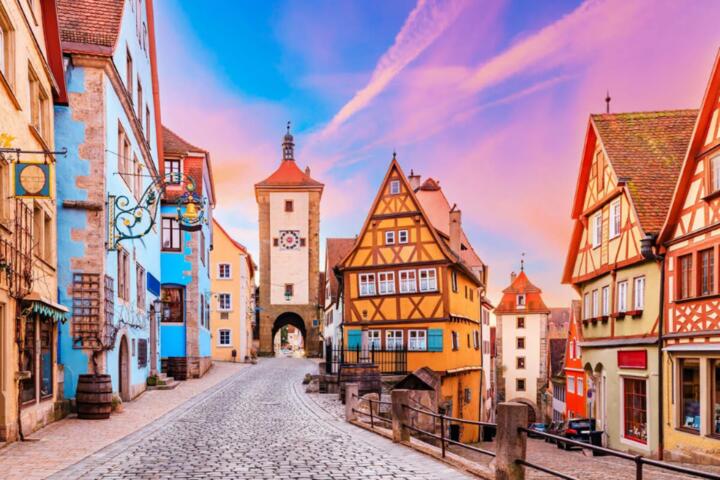
The Architecture of Cities
When we speak of cities "frozen in time," we are discussing a phenomenon known in urban planning as morphological persistence. Unlike modern hubs that underwent radical "Haussmannization" or post-WWII reconstruction, these enclaves survived due to geographical isolation, economic shifts, or early-onset preservation laws. For instance, the town of Quedlinburg, Germany, boasts over 1,300 timber-framed houses spanning five centuries simply because it remained outside the primary industrial zones of the 19th century.
In practice, these cities serve as living laboratories. In Siena, Italy, the medieval city layout remains so intact that the 17 contrade (districts) still operate under social structures established in the 1200s. According to Eurostat data, cultural tourism accounts for nearly 40% of all European travel, but "heritage density"—the ratio of protected structures to square kilometers—is highest in secondary cities rather than capital hubs. Understanding this helps travelers bypass the "museum-city" feel of Venice for the lived-in history of places like Girona or Tallinn.
Heritage Travel Pitfalls
Many travelers approach historical European destinations with a "checklist" mentality, which often results in a shallow, frustrating experience. The primary mistake is the "Day Trip Syndrome." Visiting a town like Bruges between 11:00 AM and 4:00 PM puts you at the peak of cruise ship and bus tour congestion. You lose the ability to see the city's scale, and you contribute to the "Disneyfication" of the local economy, where shops sell mass-produced lace rather than artisanal goods.
Another significant issue is the lack of logistical preparation for medieval infrastructure. Many visitors fail to account for the "ZTL" (Zona a Traffico Limitato) in Italian cities or the strict cobblestone-only zones in the Baltics. This leads to heavy fines or physical exhaustion. Furthermore, there is a pervasive "Information Gap." Relying solely on top-tier social media influencers often leads travelers to the same three photo spots, ignoring the deeper historical context that provides the actual "value" of the trip.
Strategic Planning
Focus on "Buffer Zone" Accommodations
To truly experience a city frozen in time, you must stay within the walls, but avoid the main square. Use platforms like Plum Guide or **https://www.google.com/search?q=historic-hotels.com** to find properties with heritage designations. For example, staying in a converted parador in Almagro, Spain, provides a tactile connection to history that a modern hotel cannot replicate.
Leverage Specialized Heritage Apps
Standard mapping apps often struggle with narrow medieval alleys. Instead, use Rick Steves’ Audio Europe for curated historical walks or GPSmyCity for offline, turn-by-turn navigation through secondary streets. These tools focus on the "why" behind the architecture, such as explaining the "Tax on Windows" visible in old facades in Amsterdam or Chester.
Optimize for "Blue Hour" Logistics
The magic of a medieval city is its lighting. Schedule your primary photography and walks for 6:00 AM or 9:00 PM. Data from AirDNA suggests that guests who choose stays in "Old Town" districts report 30% higher satisfaction scores when they engage in late-evening or early-morning activities, as the atmosphere shifts from a commercial hub to a silent sanctuary.
Support the "Kilometer Zero" Economy
Seek out the Botteghe Storiche (Historic Shops) designation in Italy or the Entreprise du Patrimoine Vivant in France. These are businesses that have operated for generations. Purchasing a handmade notebook from Antica Cartotecnica in Rome or a pint at The Olde Trip to Jerusalem in Nottingham (dating back to 1189) ensures your capital supports the preservation of the very atmosphere you came to see.
Utilize Regional Train Networks over Car Rentals
The best-preserved towns were often built before cars. Trying to park a rental in Eze or Rothenburg ob der Tauber is a logistical nightmare. Use the Omio or Trainline apps to map out regional spurs. The Swiss SBB network, for instance, provides seamless access to Stein am Rhein, a town famous for its painted facades, without the need for a vehicle.
Case Examples
The Case of Ghent vs. Bruges
While Bruges is often cited as the "frozen" city, Ghent provides a superior case for the "living" historical city. In 2017, Ghent implemented a "Circulation Plan" that drastically reduced car traffic in the center. The result was a 17% increase in cycling and a significant restoration of the city's medieval silence. Travelers using the Gent-Sint-Pieters rail hub find that while the architecture is just as ancient as Bruges, the local culture remains dominant over the tourist trade.
The Revitalization of Matera, Italy
Matera was once considered the "shame of Italy" due to its poverty-stricken cave dwellings (Sassi). After being named a UNESCO World Heritage site and the European Capital of Culture in 2019, the city utilized a "diffused hotel" model (Albergo Diffuso). This allows visitors to stay in renovated caves scattered across the city rather than a single block. This strategy preserved the 9,000-year-old urban fabric while generating over €100 million in annual sustainable tourism revenue.
Destination Comparison
| Feature | Primary "Bucket List" Towns | Secondary "Hidden" Gems |
|---|---|---|
| Crowd Density | High (10k+ daily visitors) | Low to Moderate |
| Authenticity | Highly Commercialized | Lived-in, Local Focus |
| Cost Basis | 20-40% Premium on Dining | Standard Local Rates |
| Photography | Difficult due to crowds | Excellent, clear vistas |
| Accessibility | Major Train/Bus Hubs | Often requires regional spurs |
| Best For | First-time visitors | History buffs/Slow travel |
Historic District Errors
- Wearing the Wrong Footwear: This sounds trivial, but 500-year-old cobblestones in Prague or Edinburgh will destroy standard sneakers. Use footwear with high-traction Vibram soles.
- Ignoring Local Lunch Hours: In towns like Colmar or Sarlat-la-Canéda, kitchens close strictly at 2:00 PM. Failing to plan results in eating "tourist menus" at overpriced cafes that stay open all day.
- Over-reliance on English: In smaller "frozen" towns like Monsanto, Portugal, the level of English drops. Download offline language packs on Google Translate to interact with the local artisans who hold the keys to the town’s history.
- Flash Photography in Churches: Many medieval frescoes are light-sensitive. Aside from being disrespectful, it leads to the closure of sites for "restoration," as seen in several chapels in Florence.
- Not Checking the Festival Calendar: Arriving in Siena during the Palio without a ticket is a mistake; the city is effectively closed to casual wanderers. Conversely, arriving during a local "Sagra" (food festival) provides the best historical experience possible.
FAQ
Which European city is truly the best-preserved?
While subjective, Carcassonne (France) for fortifications, Toledo (Spain) for religious history, and Tallinn (Estonia) for Northern European hanseatic architecture are top-tier examples of intact urban grids.
How do I find towns that aren't "tourist traps"?
Look for the "Most Beautiful Villages" designations, such as Les Plus Beaux Villages de France or I Borghi più belli d'Italia. These organizations have strict entry requirements regarding population size and heritage preservation.
Is it expensive to stay in a historical center?
It varies. While Venice is costly, staying in the old town of Rhodes, Greece, or Sibiu, Romania, can be significantly cheaper than a standard hotel in a modern European capital.
What is the best time of year to visit?
"Shoulder season"—specifically May or October. You avoid the freezing winters of the north and the sweltering, crowded summers of the Mediterranean.
Are these cities accessible for people with mobility issues?
It is challenging. However, cities like Ljubljana have made massive strides in paving "smooth" paths through their old centers. Always check the European Access City Award winners for the best options.
Author’s Insight
In my decade of navigating Europe’s backstreets, I have found that the "magic" of a city frozen in time is rarely found at a landmark. It’s found in the ritual: watching the baker in Korčula open their doors at dawn or hearing the bells of St. Sophia in Ohrid. My best advice is to delete your "must-see" list for one afternoon and simply follow the oldest wall you can find. True expertise in travel isn't about how many sites you see, but how deeply you understand the one street you're standing on.
Summary
Visiting Europe’s historical hearts requires a shift from "consuming" a destination to "observing" it. By prioritizing regional rail, staying in heritage-listed accommodations, and timing your visits to avoid peak hours, you can bypass the superficiality of modern tourism. Focus on cities like Ghent, Matera, or Quedlinburg that have balanced modern life with ancient architecture. The goal is to leave the city exactly as you found it—a preserved fragment of human history that continues to breathe long after you return home.