Geological Wonders
Surreal beaches aren't just aesthetic anomalies; they are the result of specific mineralogical compositions and rare environmental conditions. For instance, the "Popcorn Beach" in Fuerteventura (Playa del Hierro) isn't covered in sand or stones, but in rhodoliths—fossilized white algae that have eroded over centuries to look like puffed corn. This is a prime example of biological sediment shaping coastal identity.
Another practical example is the bioluminescence found in the Maldives or Puerto Rico. This isn't magic; it is a chemical reaction involving Lingulodinium polyedra dinoflagellates. According to marine biology data, these organisms emit light when agitated by wave kinetic energy. Understanding the lunar cycle is crucial here: the effect is 40% more visible during a new moon phase when light pollution is at its lowest.
Common Travel Errors
Many travelers fail to research the seasonality of these phenomena, leading to significant disappointment. For example, visiting the "Starry Sea" in Vaadhoo Island during the wrong monsoon season results in seeing nothing but standard dark water. Misunderstanding tide charts can also lead to dangerous situations or missed photo opportunities at tidal-dependent sites like Honokalani.
Ignoring local conservation laws is another critical pain point. In places like Spiaggia Rosa in Italy, the sand is so rare that stepping on it carries a fine of up to €3,500. Tourists often treat these fragile ecosystems as standard public parks, leading to irreversible environmental degradation and the eventual closure of these sites to the public, as seen with Maya Bay in Thailand (which required years of closure to recover).
Strategic Visit Plans
Timing the Solar Cycle
To witness the glowing neon blue waves of Mosquito Bay, use tools like Bio Bay Forecast or Tides Near Me. You must book a "clear-bottom" kayak tour through certified operators like Vieques Adventures. The best results occur between June and October when water temperatures are higher, stimulating plankton growth. Statistics show that 85% of successful sightings happen 2-3 days after a new moon.
Decoding Volcanic Sands
Punalu’u Beach in Hawaii features jet-black sand created by basaltic lava hitting the ocean. It’s not just a visual treat; it’s a heat sink. The sand temperature can reach 120°F (49°C) by midday. Experts recommend using AllTrails to find the specific access points that avoid the protected nesting grounds of the Hawksbill turtle. Bring specialized footwear, as standard flip-flops offer insufficient thermal protection.
Accessing Hidden Caves
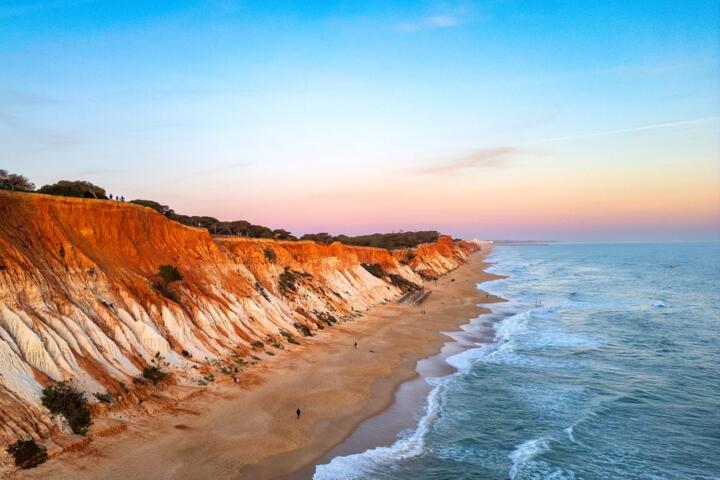
The Benagil Sea Cave in Portugal requires precise timing. Use the Hydrographic Institute website to check "Low Tide" windows. Renting a stand-up paddleboard (SUP) from Taruga Benagil Tours is more effective than a large boat, as boats are often prohibited from letting passengers disembark inside the cave. Arriving before 8:00 AM avoids the 2,000+ daily visitors that swarm the area in July.
Chasing Pink Horizons
Pink Sands Beach in Harbour Island, Bahamas, gets its hue from Foraminifera—microscopic coral insects with bright pink shells. To see the most vivid color, view the beach at sunrise or sunset when the "Golden Hour" light spectrum amplifies the red tones in the sand. Use the Windy.com app to check for western swells, which can wash up fresh sediment and enhance the color intensity.
Glacial Ice Artistry
Diamond Beach in Iceland features chunks of the Breiðamerkurjökull glacier. This is a dynamic environment where the "diamonds" change daily. Use Road.is to monitor the Ring Road conditions, especially in winter. For photography, a ND filter (Neutral Density) is essential to capture the motion of the water around the ice. Expert tip: the best ice density usually follows a high-energy storm that breaks shelf ice into the lagoon.
Global Success Stories
A luxury travel agency, Black Tomato, implemented a "Geological Deep-Dive" itinerary for a client seeking the White Sands of Lencois Maranhenses. The problem was timing; the lagoons only fill after the rainy season. By utilizing historical rainfall data from the INMET (Brazilian National Institute of Meteorology), they scheduled the trip for July. The result was a 100% success rate in seeing the turquoise lagoons amidst white dunes, a phenomenon that occurs only 4 months a year.
A solo photographer documenting the "Glass Beach" in Fort Bragg, California, used PhotoPills to calculate the exact angle of the sun hitting the sea-glass pebbles. By arriving during a king tide recession, the photographer captured high-clarity macros of the glass, resulting in a series that sold for over $5,000 in licensing. The key was the technical understanding of tidal movements and light refraction on silica surfaces.
Selection Framework
| Beach Type | Location | Best Tool | Success Metric |
|---|---|---|---|
| Bioluminescent | Puerto Rico | Lunar Calendar | New Moon + Heat |
| Black Sand | Vik, Iceland | SafeTravel App | No Sneaker Waves |
| Hidden Cave | Algarve, Portugal | Tide Table | Low Tide + AM |
| Pink Sand | Bahamas | NOAA Weather | Sunset / Clear |
| Ice/Glacial | Iceland | Vedur.is | Post-Storm |
Traveler Pitfalls
One of the biggest mistakes is underestimating the "Sneaker Wave" phenomenon at Reynisfjara, Iceland. These are disproportionately large coastal waves that can appear without warning. Never turn your back on the ocean; statistics show that even in moderate weather, these waves have caused multiple fatalities. Always stay at least 30 meters from the water line.
Another error is the "Instagram vs. Reality" trap. Many surreal beaches are heavily edited online. For example, the Rainbow Beach in Australia has 72 different colors of sand, but they are subtle streaks in cliffs, not a neon playground. Manage expectations by viewing raw, unedited footage on YouTube or TripAdvisor before booking expensive flights.
FAQ
What causes the pink sand in the Bahamas?
The pink hue comes from crushed shells of Foraminifera, tiny single-celled organisms that live in the coral reefs. When they die, their red/pink shells mix with white sand and coral debris.
Can you swim at the Diamond Beach in Iceland?
Absolutely not. The water is near freezing, the currents are incredibly strong, and the floating ice chunks can weigh several tons, posing a crush risk to anyone in the water.
Is the bioluminescence visible every night?
While the organisms are always present, the intensity varies. It is best seen on dark nights (New Moon) with minimal rain, as heavy rain can dilute the salt concentration and kill the glow.
Are you allowed to take sand from these beaches?
In almost all cases, no. It is illegal to remove sand from Hawaii, Sardinia, and many other protected zones. Fines can reach thousands of dollars and may result in airport detention.
Which beach has the clearest water in the world?
While subjective, the Cocos (Keeling) Islands and certain parts of the Exumas in the Bahamas consistently rank highest for clarity due to low sediment and specific limestone seafloors.
Author’s Insight
In my fifteen years of exploring coastal geomorphology, I have learned that the most "unreal" moments happen when you stop looking through a viewfinder and start understanding the science of the terrain. My practical advice: always check the wind direction using WindFinder. A beach that looks like a paradise in a north wind can become a seaweed-clogged mess in a south wind. The most successful travelers I know are the ones who spend more time reading charts than scrolling social media. Trust the data, respect the tide, and always leave the landscape exactly as you found it.
Summary
Surreal beaches are the Earth’s way of showcasing extreme geological and biological diversity. Whether it is the fossilized algae of Fuerteventura or the basaltic shards of Iceland, these locations require more than just a ticket—they require respect for the local ecology and precise timing. For your next trip, prioritize data-driven planning over aesthetic trends. Use tide apps, lunar calendars, and local weather monitors to ensure that the "unreal" sights you've seen online actually manifest before your eyes. Start by downloading a reliable tide tracker and checking the 2024 lunar cycle today.