Living Chronologies: How Structures Document Human Progress
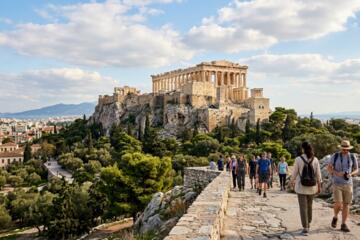
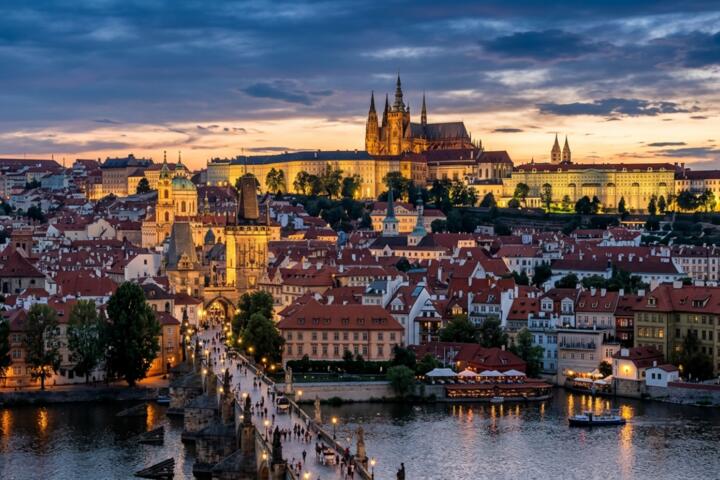
Architecture is often described as "frozen music," but in reality, it is a nation’s most honest autobiography. Unlike written history, which can be edited or censored, a building’s materials, layout, and ornamentation reflect the genuine economic priorities and social hierarchies of its era. When we walk through a city, we are navigating a vertical timeline where a 12th-century cathedral and a 21st-century skyscraper coexist as chapters of the same story.
Consider the Hagia Sophia in Istanbul. It isn't just a masterpiece of Byzantine engineering; its transition from a church to a mosque and now a museum encapsulates the entire religious and political shift of the Anatolian peninsula. Similarly, the Haussmann renovation of Paris in the mid-19th century wasn't just an aesthetic choice; it was a strategic urban intervention designed to prevent uprisings by widening streets and improving sanitation, forever defining the "French" identity through limestone and slate.
Research by the National Trust for Historic Preservation indicates that heritage tourism accounts for nearly $192 billion in annual spending in the U.S. alone. This proves that architectural heritage is not a static relic but a dynamic economic engine that fuels local economies while anchoring national pride.
The Decay of Identity: Why We Fail Our Historic Assets
The primary threat to architectural heritage isn't just time; it is the "logic of the bulldozer." Developers often view historic structures as obstacles to density and profit, leading to Facadism—the practice of gutting a building’s interior and leaving only the shell. This strips the building of its soul, turning a three-dimensional historical record into a two-dimensional stage set.
Ignoring the structural integrity of heritage sites leads to "demolition by neglect." When a nation loses its landmarks, it loses its "sense of place," leading to the homogenization of urban environments. If every city in the world looks like a generic glass-and-steel grid, the unique cultural narrative that attracts talent and investment evaporates.
We see this crisis in the rapid urbanization of Southeast Asia, where ancient "shophouses" are being replaced by high-rises. The consequence is a loss of social cohesion, as these traditional spaces once facilitated communal living and local trade that modern residential towers often fail to replicate.
Strategic Preservation: Moving Beyond Museums
Preservation must evolve from "preservation as a hobby" to "preservation as a sustainable urban strategy." The goal is not to turn every old building into a museum, but to ensure they remain functional participants in the modern economy.
Adaptive Reuse: The Lifeblood of Sustainability
The most sustainable building is the one that is already built. Adaptive reuse involves retrofitting historic structures for contemporary needs—turning old warehouses into tech hubs or cathedrals into libraries. This reduces carbon emissions by avoiding the energy-intensive process of new construction. According to the Advisory Council on Historic Preservation, it can take 10 to 80 years for a new "green" building to overcome the climate impact caused by the demolition of an existing one.
Material Science and Digital Reconstruction
Modern conservation utilizes 3D Laser Scanning (LiDAR) and Building Information Modeling (BIM) to create digital twins of heritage sites. This allows architects to simulate structural stresses and test restoration materials before touching the original stone. Using services like Autodesk Recap or Leica Geosystems, preservationists can map cracks with sub-millimeter accuracy, ensuring that repairs are surgical rather than invasive.
Tax Credits and Financial Incentives
Governments must use "carrots" rather than just "sticks." In the United States, the Federal Historic Tax Credit (HTC) provides a 20% credit for the rehabilitation of income-producing historic buildings. Since its inception, the program has leveraged over $199 billion in private investment. This makes the "expensive" choice of restoration financially competitive with new builds.
Community-Led Documentation
Heritage isn't just about grand palaces; it's about the vernacular architecture of everyday life. Platforms like OpenStreetMap and local heritage apps allow citizens to tag and document unrecognized local landmarks. This "crowdsourced preservation" creates a bottom-up map of what a community actually values, preventing developers from claiming a site has "no historical significance."
The Role of International Oversight
Organizations like UNESCO and ICOMOS provide the gold standard for conservation. Their "Venice Charter" remains the foundational text, emphasizing that restoration should stop where conjecture begins. Following these global protocols ensures that a nation's story isn't rewritten by modern tastes, but merely clarified for the next generation.
Architectural Successes: From Ruin to Icon
The Tate Modern (London, UK)
The Bankside Power Station was a redundant industrial monolith designed by Sir Giles Gilbert Scott. Instead of demolition, Swiss architects Herzog & de Meuron transformed it into the Tate Modern. By retaining the massive turbine hall, they preserved London’s industrial heritage while creating one of the most visited modern art galleries in the world.
- Result: The project sparked a total regeneration of the South Bank, contributing billions to the local economy and proving that "ugly" industrial sites are vital historical markers.
The High Line (New York, USA)
An abandoned elevated railway in Manhattan was slated for demolition. A community-led initiative transformed it into a linear park. This "industrial heritage park" preserved the DNA of the West Side's meatpacking history.
- Result: Property values in the surrounding area increased by over 100%, and the model has been replicated globally, from Seoul to Mexico City.
Preservation Strategy Checklist
| Category | Task | Requirement |
|---|---|---|
| Assessment | Conduct a LiDAR scan | Digital twin with 99.9% accuracy |
| Environment | Passive cooling analysis | Assess original airflow before adding HVAC |
| Material | Petrographic analysis | Match original stone/mortar chemical composition |
| Legal | National Register Check | Verify eligibility for 20% tax credits |
| Utility | Structural Retrofitting | Seismic upgrades that don't alter visibility |
| Community | Social Impact Study | How does the site serve the local neighborhood? |
Critical Pitfalls in Heritage Management
One of the most frequent mistakes is over-restoration. In an attempt to make a building look "new," contractors often use modern Portland cement on historic lime-mortar masonry. Because cement is harder and non-porous, it traps moisture inside the original stones, causing them to shatter during freeze-thaw cycles. Always use breathable materials that match the original's physical properties.
Another error is ignoring the "intangible" heritage. A building's story isn't just its walls; it's the craftsmanship used to build it. If you hire a generic construction firm to fix a 17th-century Japanese minka, you lose the joinery techniques that are part of the national identity. Specialist firms like Graciela Ainsworth Sculpture Conservation or World Monuments Fund partners are essential for maintaining the "knowledge heritage."
FAQ
What is the difference between restoration and preservation?
Preservation focuses on maintenance and repair to keep a building in its current state, while restoration aims to return a structure to its appearance at a specific point in history, often by removing later additions.
Can a building be too modern to be "heritage"?
No. Many "Mid-Century Modern" buildings or even Brutalist structures from the 1970s are now considered heritage. The Getty Conservation Institute has extensive programs dedicated to preserving 20th-century concrete architecture.
How does architectural heritage affect property value?
Studies consistently show that properties in designated historic districts maintain their value better during economic downturns and appreciate faster during booms compared to non-historic neighborhoods.
Is adaptive reuse more expensive than building from scratch?
Initially, it can be 10–15% more expensive due to unforeseen structural issues. However, when you factor in tax credits, reduced demolition costs, and the "prestige" premium that attracts high-end tenants, the long-term ROI is usually higher.
Does UNESCO status protect a building from demolition?
Technically, no. UNESCO provides recognition and guidelines, but legal protection must come from national and local laws. However, losing UNESCO status (as happened in Liverpool or Dresden) carries massive reputational and tourism penalties.
Author’s Insight
In my years observing urban shifts, I’ve realized that people don't fall in love with "space"—they fall in love with "place." A glass tower is space; a weathered brick alleyway with a hundred-year-old sign is a place. When we lose these buildings, we experience a form of collective amnesia. My advice to developers is simple: don't look at an old building and ask how much it costs to fix. Ask what the neighborhood would lose if it vanished. The most successful modern cities are those that treat their history as a foundation, not a footstool.
Conclusion
Architectural heritage is the only medium through which a nation can physically touch its past. To protect these story-telling structures, we must move beyond sentimentalism and embrace data-driven conservation, adaptive reuse, and aggressive financial incentives. Use tools like BIM for mapping, prioritize breathable materials, and leverage tax credits to make preservation a viable business model. The buildings we save today are the only evidence the future will have of who we were and what we valued. Ensure your next project respects the narrative written in stone.