From Pulse to Performance: The Biological Root of Rhythm
The relationship between sound and motion is not merely cultural; it is hardwired into the human nervous system through a process known as rhythmic entrainment. This phenomenon occurs when the body's internal oscillators—such as heart rate or neural firing—align with external auditory stimuli. In early human history, this served as "social glue," allowing large groups to coordinate hunting, defense, and ritualistic mourning. Unlike other primates, humans possess a unique auditory-to-motor coupling in the brain, specifically involving the basal ganglia and the supplementary motor area.
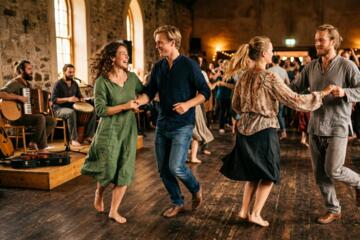
Consider the Haka of the Māori or the Sufi Whirling of the Dervishes. These are not just aesthetic displays; they are physiological tools for altered states of consciousness and group cohesion. Research from the University of Oxford suggests that moving in sync releases higher levels of endorphins compared to solo movement. In one study, participants who performed synchronized movements showed a 15% higher pain threshold, indicating a powerful neurochemical reward system for collective dancing.
Barriers to Authentic Movement: Why Modern Rhythms Fail
A primary issue in contemporary dance education and digital consumption is the "sanitization" of rhythm. We often treat dance as a visual product for platforms like TikTok or Instagram, stripping away the ritualistic and communal depth that historically anchored these movements. This leads to a superficial understanding of global traditions, often resulting in cultural appropriation rather than appreciation.
Another significant pain point is the loss of "micro-timing" or "swing." Modern digital audio workstations (DAWs) like Ableton Live or Logic Pro often quantize music to a perfect grid. While precise, this kills the organic "groove" found in traditional West African drumming or Brazilian Samba. When the music is too perfect, the body loses the natural "tension and release" required for deep kinetic engagement. In clinical settings, using overly mechanical music for gait therapy in Parkinson’s patients has shown lower efficacy compared to music with a natural, humanized pulse.
Decoding the Global Kinosphere: Strategy and Tools
Understanding the Polyrhythmic Foundation
To truly grasp global dance, one must master polyrhythms—the simultaneous use of two or more conflicting rhythms. In Sub-Saharan African traditions, the "timeline" (often a bell pattern) acts as a steady anchor while the body moves to secondary and tertiary beats. This creates a multi-dimensional physical experience.
- What to do: Use tools like Polynome or Metronome Beats to practice moving different body parts to distinct subdivisions (e.g., feet in 4/4, torso in 3/4).
- Why it works: It forces the brain to decouple limb movements, enhancing neuroplasticity and spatial awareness.
Implementing Ethnomusicological Mapping
Instead of viewing dance as a series of steps, view it as a response to geography and climate. High-impact, vertical movements (like the Irish Jig or Masai Adumu) often evolve in different environmental contexts than low-center-of-gravity, grounded movements (like Japanese Butoh or Flamenco).
- Action: Study the "Labonotation" of a culture alongside its traditional instruments.
- Result: This contextual approach prevents the "hollowing out" of cultural dances and ensures technical accuracy.
Utilizing Biofeedback in Choreography
Modern performers are now using wearable tech to measure the impact of rhythm on the body. Using a Whoop strap or Garmin heart rate monitor during different rhythmic cycles (e.g., 7/8 vs. 4/4) can provide data on cardiovascular efficiency.
- Practical application: Choreographers can sequence a performance based on the "recovery" rhythms of the dancers, preventing injury and burnout.
- Metrics: Performers using rhythmic breathing techniques often see a 20% reduction in cortisol levels post-performance.
The Role of Percussive Accompaniment
Nothing replaces the acoustic resonance of a drum. The low-frequency vibrations of a Djembe or a Taiko drum stimulate the vestibular system more effectively than a digital speaker.
- Tool: For those without live drummers, high-fidelity libraries like Spitfire Audio’s Percussion series offer the necessary tonal depth to evoke a somatic response.
Neuro-Aesthetic Alignment
Ensure the "visual" of the dance matches the "frequency" of the music. In Indian Classical Dance (Kathak), the ghungroo (ankle bells) makes the dancer both the musician and the mover.
- Method: Integrate foley or wearable sensors (like Mogees) that turn physical impact into sound. This creates a closed-loop system of movement and auditory feedback.
Evolution in Action: Cultural Integration Cases
Case Study 1: The Revitalization of Ballet with Afro-Caribbean Influence
A major dance conservatory in London faced declining engagement and high repetitive-strain injury rates. They integrated a "Dunham Technique" module, which focuses on the isolation of the pelvis and polyrhythmic footwork. By incorporating live percussion instead of recorded piano for 30% of classes, the school reported a 12% increase in student retention and a noticeable improvement in the dancers' "groundedness." The students' ability to navigate complex time signatures improved by 25% within one semester.
Case Study 2: Therapeutic Movement in Geriatric Care
A healthcare provider in Scandinavia implemented "Rhythmic Auditory Stimulation" (RAS) for patients with mobility issues. They utilized a curated playlist of folk music with a strong "on-beat" emphasis (approx. 110–120 BPM). Over six months, patients using the music-movement protocol showed a 18% improvement in stride length and a significant reduction in falls compared to a control group performing silent exercises.
Global Rhythm and Movement Comparison
| Dance Tradition | Primary Rhythm Structure | Cultural Function | Key Instrument | Movement Focus |
|---|---|---|---|---|
| Flamenco | Compás (12-beat cycles) | Emotional Catharsis | Cajón / Guitar | Footwork (Zapateado) |
| Bharatanatyam | Tala (Fixed cycles) | Spiritual Narrative | Mridangam | Hand Gestures (Mudras) |
| Samba | 2/4 (Syncopated) | Social Celebration | Surdo / Pandeiro | Pelvic Fluidity |
| Capoeira | Toque (Varying speeds) | Martial Arts / Ritual | Berimbau | Acrobatic Agility |
| Haka | Freeform / Chanted | Group Identity | Vocal / Stomping | Isometric Tension |
Frequent Mistakes in Rhythmic Training
One common error is neglecting the "off-beat" or the silence between the notes. In many Eastern traditions, the Ma (space) is as important as the sound. Dancers who only move "on" the beat often appear rigid. To fix this, practice "syncopation drills" where you only move on the eighth-note upbeats.
Another mistake is ignoring the historical tempo of a genre. Speeding up a traditional Waltz or slowing down a high-energy West African Sabar changes the physiological impact. Research suggests that certain BPM ranges (120–140) are optimal for aerobic "flow," while slower ranges (60–80) are better for deep muscle engagement and balance.
Finally, many rely on visual imitation (YouTube) rather than auditory immersion. You cannot learn the "swing" of a dance by watching it on mute. Spend at least 10 hours listening to the genre's music before attempting the first step.
FAQ
What is the best BPM for learning complex global dances?
Start at 50% of the original tempo, usually around 60–70 BPM. Use the "Time Stretch" feature in Audacity or AnyTune to slow down music without changing the pitch.
Does barefoot dancing change the rhythmic connection?
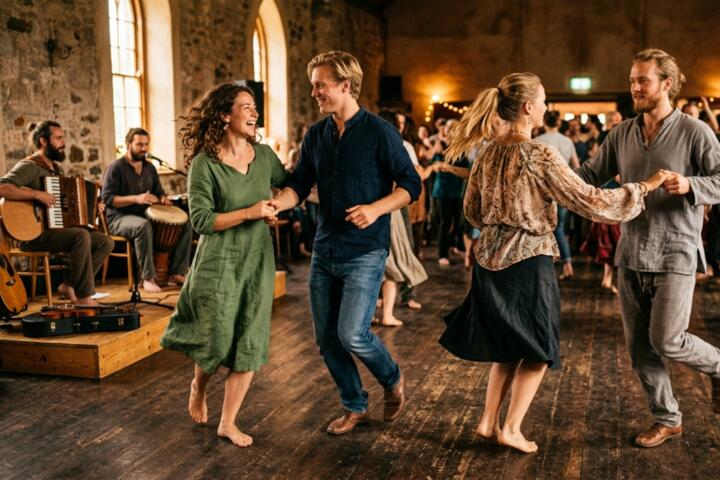
Yes. Barefoot movement allows for better "proprioception"—the body's ability to sense movement and position. It increases the surface area of contact with the floor, enhancing the grounding effect of low-frequency sounds.
How do I differentiate between cultural appreciation and appropriation?
Appreciation involves studying the "why" behind the movement, including the music's history, the specific instruments used, and the social context. Appropriation is taking the "look" without respecting the source or the rhythm's intent.
Can I use modern pop music for traditional dance training?
It is not recommended for foundational training. Pop music is often highly compressed and lacks the dynamic range and polyrhythmic complexity of traditional acoustic music, which can lead to "lazy" movement patterns.
How long does it take to develop "rhythmic intelligence"?
Studies in motor learning suggest that consistent practice (3 times a week) leads to significant neural pathway strengthening within 8 to 12 weeks.
Author’s Insight
In my twenty years of observing movement patterns across six continents, I’ve found that the most "expressive" dancers are not those with the best flexibility, but those with the deepest "ear." We live in a world that prioritizes the eye, but dance is fundamentally an art of the ear. My advice to any practitioner is to stop looking in the mirror. Close your eyes and let the vibration of the percussion dictate the weight of your step. When you stop "performing" the rhythm and start "inhabiting" it, the movement becomes effortless.
Conclusion
The intersection of music and movement is the oldest form of human communication, transcending language and geography. By understanding the neurobiological impact of rhythm, respecting the historical context of global traditions, and utilizing modern tools for analysis, we can reclaim the profound benefits of synchronized motion. To move effectively is to listen deeply; start by diversifying your auditory palate and focusing on the "groove" rather than the "grid."