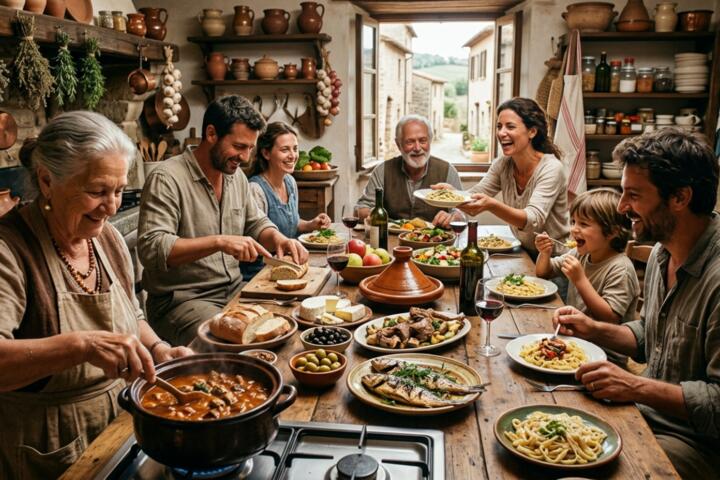
The Edible Archive: Understanding Gastronomic Identity
Culinary heritage is far more than a collection of recipes; it is a repository of a nation’s climate, trade history, and social values. When we speak of a "national dish," we are actually discussing a complex tapestry of migration patterns and agricultural evolution. For instance, the presence of spices like saffron in Spanish paella or cinnamon in Mexican mole tells a story of centuries-old trade routes and colonial intersections that shaped modern borders.
In practical terms, food is a primary driver of the global economy. According to the World Food Travel Association, approximately 53% of leisure travelers choose their destination based on food and drink experiences. This shift from "sightseeing" to "tasteseeking" has transformed local kitchens into vital assets for national branding. In 2010, UNESCO officially recognized the "Gastronomic Meal of the French" as Intangible Cultural Heritage, cementing the idea that how we eat is as historically significant as the monuments we build.
Real-world data suggests that culinary preservation pays dividends. Countries that invest in "Geographical Indication" (GI) tags—like Italy with its Parmigiano Reggiano or Greece with Feta—see a significant markup in export value. These protections ensure that the "soul" of the food remains tied to its geography, preventing the generic reproduction that strips a culture of its uniqueness.
The Erosion of Authenticity: Critical Pain Points
One of the most significant mistakes modern nations and hospitality brands make is the "Disneyfication" of local cuisine. This occurs when traditional dishes are over-simplified or altered to suit a perceived global palate, leading to a loss of nuanced flavors and cooking techniques. When a recipe is stripped of its labor-intensive steps—like the 24-hour fermentation required for authentic Ethiopian injera—the cultural narrative begins to fray.
This issue is critical because culinary homogenization leads to "cultural amnesia." Younger generations, influenced by fast-food giants and global delivery apps like Uber Eats or Deliveroo, may lose the skill set required to maintain their heritage. A study by the Slow Food Movement found that over 75% of the world’s food varieties have disappeared in the last century as we move toward a monoculture of taste.
The consequences are both economic and social. When a destination becomes a "culinary theme park," it attracts low-value, high-volume tourism that often exploits local resources without giving back. Real situations in places like Venice or parts of Southeast Asia show that when local food markets are replaced by souvenir shops and "tourist menus," the local community loses its sense of place, leading to social friction and a decline in the quality of the visitor experience.
Strategies for Preserving and Leveraging Culinary Roots
Mapping the Gastronomic Ecosystem
To protect the soul of a country, one must first document it. This involves more than just writing down ingredients; it requires mapping the entire supply chain from soil to plate. Using tools like StoryMaps or digital archives, organizations can track where specific heirloom seeds are grown and which artisanal techniques are at risk of extinction.
Implementing Origin Protections
Governments should aggressively pursue protected status for their indigenous products. The European Union’s PDO (Protected Designation of Origin) and PGI (Protected Geographical Indication) frameworks are the gold standards here. By legally tethering a product name to a specific region, you protect the income of local farmers and ensure that the "soul" of the product cannot be commodified by external corporations.
Integrating Education into the Supply Chain
Authenticity survives when it is taught. Culinary schools must prioritize traditional techniques alongside modern molecular gastronomy. Brands like Airbnb Experiences have successfully monetized this by allowing local "grandma" figures to host cooking classes, ensuring that oral traditions are passed down while providing a direct revenue stream to the keepers of the culture.
Utilizing Blockchain for Traceability
Modern technology can actually serve ancient traditions. Implementing blockchain platforms like IBM Food Trust allows consumers to scan a QR code and see the exact farm in the Andes where their quinoa was harvested. This transparency builds trust and commands a premium price, proving that the "story" of the food is a high-value commodity.
Promoting Hyper-Local Sourcing
Restaurants should move beyond "farm-to-table" as a marketing slogan and integrate it into their core operations. Using procurement software like Choco or Rekki, chefs can connect directly with small-scale local producers, bypassing global wholesalers. This keeps the local agricultural economy vibrant and ensures the flavors remain distinct to the terroir.
Developing Gastronomy Circuits
Tourism boards should design "Culinary Trails" that lead visitors away from capital cities and into rural heartlands. Japan’s "Oishii" trails are a perfect example, where travelers visit specific prefectures for their unique sake or miso. This distributes wealth and encourages rural communities to maintain their traditional foodways rather than migrating to urban centers.
Success Stories in Gastronomic Preservation
The Nordic Kitchen Manifesto
In the early 2000s, Scandinavian cuisine was largely overshadowed by French and Italian traditions. A group of chefs, led by René Redzepi of Noma, created the "New Nordic Kitchen Manifesto." They focused on hyper-local ingredients like sea buckthorn, lichen, and musk ox. The result was a total transformation of the region’s image. Copenhagen became a global culinary capital, and Denmark saw a 12% increase in gastro-tourism revenue within five years, proving that embracing "forgotten" local flavors can redefine a nation's soul.
Peru’s Gastronomic Revolution
Peru used its biodiversity as a tool for national pride and economic growth. Led by chef Gastón Acurio, the country promoted Ceviche and Lomo Saltado as symbols of Peruvian identity. Through the Mistura Food Festival, they connected thousands of small-scale potato farmers with high-end chefs. This effort didn't just boost tourism; it elevated the social status of farmers and made "Peruvian" a top-tier global food category, now valued at billions in the international restaurant sector.
Comparative Framework: Traditional vs. Homogenized Models
| Feature | Heritage-Based Model | Globalized/Homogenized Model |
|---|---|---|
| Sourcing | Hyper-local, seasonal, heirloom varieties | Global supply chain, year-round availability |
| Economic Impact | High retention of wealth in local communities | Profits often exit the country via franchises |
| Cultural Value | Strengthens national identity and pride | Dilutes local culture for "universal" appeal |
| Environmental | Promotes biodiversity and lower food miles | High carbon footprint and monoculture reliance |
| User Experience | Authentic, educational, and unique | Predictable, convenient, but forgettable |
Common Pitfalls and How to Navigate Them
A frequent error is the "museum approach" to food—trying to keep recipes exactly as they were 200 years ago without allowing for natural evolution. Culture is a living thing. To avoid stagnation, allow for modern interpretations that respect the core "spirit" of the dish. For example, using modern kitchen equipment like a Thermomix to achieve a traditional texture is acceptable; replacing the local chili with a cheaper, generic substitute is not.
Another mistake is ignoring the "invisible" workers of the culinary world—the street food vendors and home cooks. Many countries focus their marketing on Michelin-starred restaurants while neglecting the night markets or village squares where the real soul of the country resides. To fix this, cities like Singapore have pioneered the "Hawker Center" model, providing clean, regulated spaces for traditional street food to thrive, eventually earning them UNESCO status.
Finally, avoid "greenwashing" your culinary heritage. If a menu claims to be traditional but uses frozen, imported ingredients, savvy modern consumers will find out. Tools like Trustpilot and Google Maps reviews make it impossible to hide inauthenticity. Honesty about the origin of ingredients is the only way to build long-term E-E-A-T (Experience, Expertise, Authoritativeness, and Trustworthiness).
FAQ
How does food contribute to a country's "soft power"?
Food acts as a non-threatening cultural ambassador. "Gastrodiplomacy" programs, like those run by Thailand or South Korea, use food to build a positive national image abroad, making people more likely to visit or buy products from that country.
Can a country "invent" a culinary heritage?
While heritage usually evolves over centuries, it can be consciously curated. The modern "Traditional English Breakfast" or even the widespread use of salmon in Japanese sushi are relatively recent constructs that have been successfully integrated into national identities through clever marketing.
What role does technology play in preserving food soul?
Digital archives, AI-driven recipe preservation, and high-tech supply chain tracking help protect rare techniques and ingredients from disappearing in the face of industrialization.
Is culinary heritage exclusive to old countries?
Not at all. "Fusion" cultures like those in the United States, Australia, or Singapore have created their own rich heritages by blending diverse migrant traditions into something entirely new and soulful.
How can I support culinary heritage as a consumer?
Seek out "Certified Origin" products, eat at independent local restaurants rather than global chains, and use apps like Eatwith to find authentic dining experiences with locals.
Author’s Insight
In my fifteen years of traveling through the world's most vibrant kitchens, I’ve learned that you can't fake the soul of a dish. I once spent a week in a small village in Oaxaca, Mexico, watching how they processed corn for tortillas using the ancient nixtamalization method. That specific smell—earthy, lime-infused, and ancient—cannot be replicated in a factory. My advice to anyone in the food or tourism industry is simple: stop looking for what is "trendy" and start looking for what is "true." Authenticity is the only currency that never devalues.
Conclusion
Culinary heritage is the heartbeat of a nation, offering a sensory roadmap of its past and a sustainable blueprint for its future. By protecting indigenous ingredients, supporting local producers through platforms like OpenFoodNetwork, and resisting the urge to homogenize flavors for the mass market, we preserve the very essence of what makes a culture worth exploring. The most successful nations of the 21st century will be those that realize their most valuable asset isn't just their technology or infrastructure, but the stories told around their dinner tables. Focus on authenticity, invest in local supply chains, and treat your recipes as the national treasures they truly are.