Villa Density And Privacy
Villa density describes how many villas sit within a given area and how they are arranged relative to each other. Privacy at a resort depends less on the word “private villa” and more on physical spacing, sightlines, and the way people move through shared spaces.
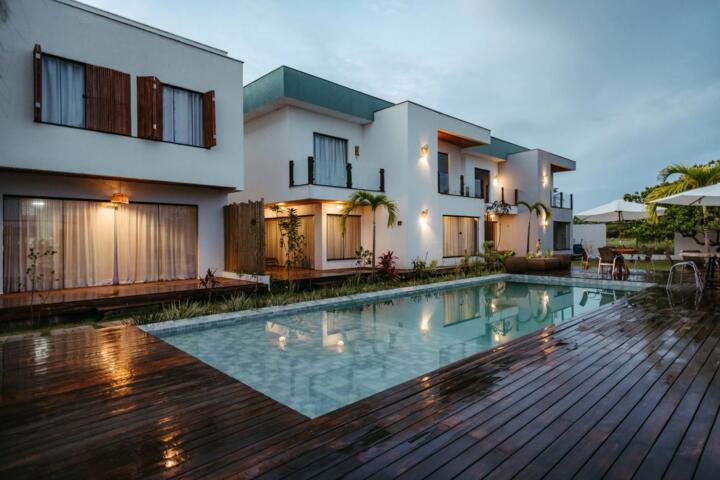
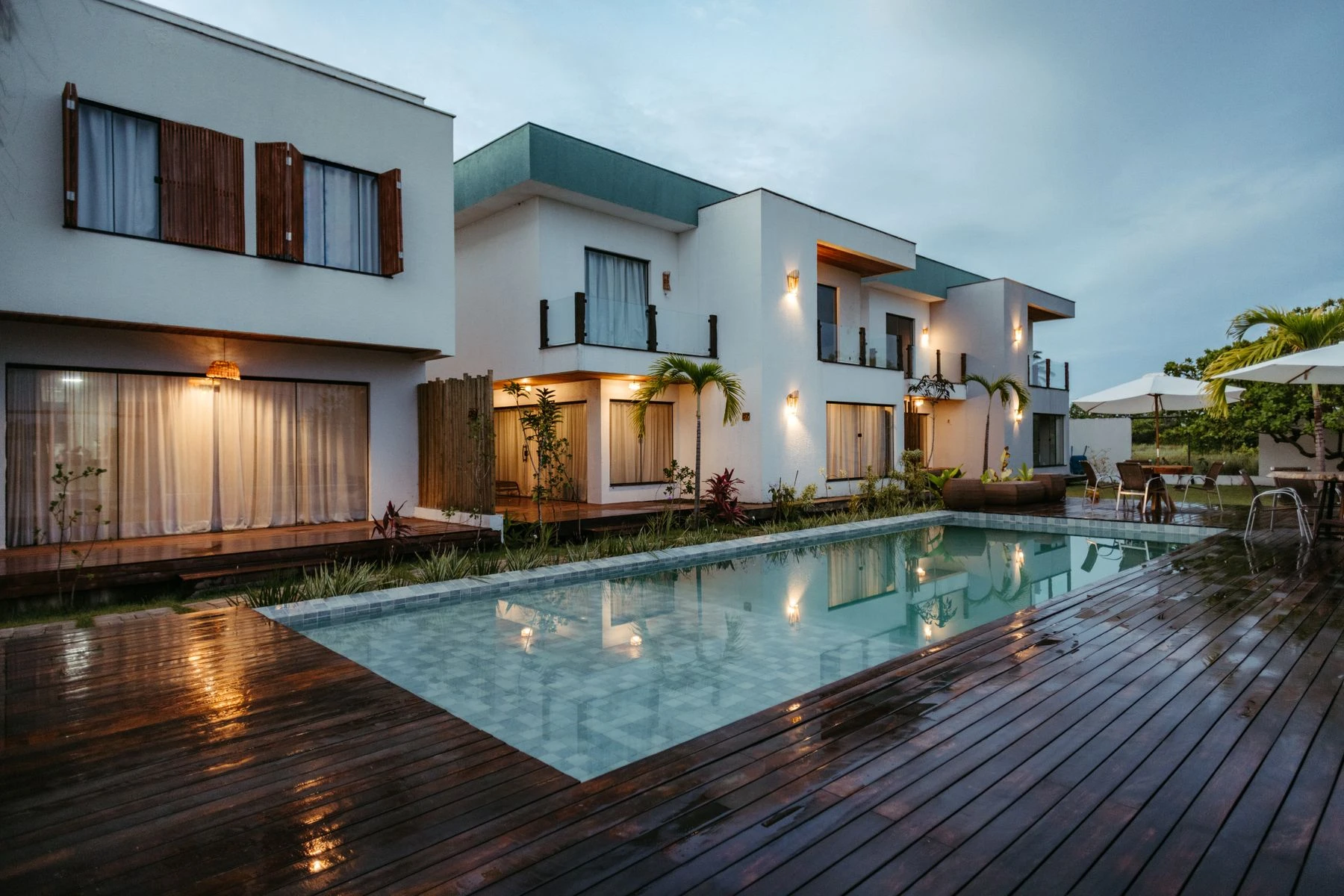
Two resorts can list the same villa count, yet feel different because of layout choices. A resort with villas spaced 20 to 30 meters apart can still feel exposed if terraces face each other directly. Another resort can feel secluded even with closer buildings if landscaping, walls, and elevation changes block views and reduce noise paths.
Practical examples help. If your villa has a plunge pool, privacy hinges on whether neighbors can see into the water from their terrace or from a walkway behind the property. If the resort uses shared footpaths to reach restaurants, the “quiet” part of your stay can be interrupted by foot traffic passing near windows, not just by people in nearby villas.
What People Get Wrong
Many travelers judge privacy using only the villa’s interior photos, then discover that the outside space tells a different story. A villa can look secluded from the front, while the back terrace aligns with another villa’s seating area or a service corridor.
Privacy also depends on dependencies that are rarely stated in listings. Sightlines depend on elevation, fence height, and vegetation density, which can change with seasons. Noise transfer depends on building materials, roof shape, and whether walls face each other at close range. Crowd flow depends on where the resort places check-in, dining, and beach access, since the busiest routes often run near villa clusters.
Even “low density” can fail privacy expectations when the resort concentrates villas into a few rows. In that case, you get long sightlines across a shared lawn, and the same group of villas repeatedly shares the same walking paths. A resort map with a simple grid can hide this pattern, and a photo angle can hide the direction of views.
When you review a floor plan or resort map, look for the direction of terraces and the location of paths. A terrace facing a path behind the villa can feel less private than a terrace facing a garden that sits lower than your eye level. This is the part that most people skip because it requires a bit of spatial thinking.
How To Evaluate Density
Check Sightlines And Angles
Start with the outside. If the resort provides a site plan, trace where your terrace faces and where neighboring terraces sit relative to it. If the plan lacks detail, use satellite views or street-view style imagery when available, then compare with the resort’s own photos.
Look for direct “face-to-face” alignment. A gap of 10 to 15 meters can still feel open if terraces are at the same height and have low railings. Conversely, a 15 to 25 meter gap can feel private if one villa sits on a slope and the other is screened by mature trees or a solid wall.
For a quick reality check, zoom in on photos for visible lines of sight. In one resort listing I reviewed in 2024, the terrace photo showed a hedge, but a second photo from the adjacent villa revealed the hedge was trimmed low along the walkway edge. That small difference changed the privacy feel.
Assess Noise Paths
Noise privacy depends on where sound travels. Footsteps, voices, and music often move along hard surfaces and through gaps around doors and windows. If villas share a common driveway or service lane, you can hear deliveries even when the resort is quiet at night.
Ask whether the resort uses shared outdoor areas near your villa cluster, such as a pool deck or a kids’ play zone. If the resort has a central restaurant, check whether the route to it passes within a few meters of villa entrances. A resort can be “quiet at night” yet still have early-morning activity near rooms closest to housekeeping storage.
When you read recent guest reviews, search for terms tied to location: “walkway,” “near the restaurant,” “service road,” or “music at night.” Reviews written with a room or villa number help more than generic comments, and you can cross-check those numbers on the resort map if it exists.
Use Booking Questions That Work
Send a short message to the property before booking. Ask for the villa’s orientation and whether any neighboring terraces face yours. Request a specific location description, such as “not adjacent to the main footpath” or “not in the first row near the restaurant route.”
Ask about privacy features that are often inconsistent across villas: fixed screening walls, mature landscaping, and whether outdoor furniture is positioned to face inward. If the resort offers multiple villa categories with the same square footage, ask whether the privacy differences come from layout or from upgrades.
Keep the question grounded in your use. If you plan to use the terrace after sunset, ask whether lighting from nearby paths shines into the villa. If you travel with children, ask whether the nearest shared play area sits within the same walking loop.
Plan For Occupancy And Timing
Villa density interacts with occupancy. A resort with low density can feel crowded during peak check-in days if the walking routes funnel through the same narrow areas. A resort with higher density can feel calmer when occupancy is low and the resort spaces guests across multiple dining times.
Timing matters for privacy. Weekends often bring higher day-visitor counts at pools and beaches, which can increase noise near villa clusters closest to those amenities. If the resort offers day passes, ask whether they concentrate in a specific zone.
For a practical outcome target, aim to book a villa that is not on the shortest route to the beach or dining. Even a small detour inside the property can reduce repeated foot traffic near your terrace.
Educational Case Examples
Scenario A: A couple booked a “garden villa” with a terrace facing a landscaped area. The first two days felt private, then they noticed evening foot traffic from a nearby shortcut to dinner. The resort map showed the shortcut ran behind the villas, and the terrace railing was low enough to see people passing. They asked to switch to a villa on the opposite side of the cluster, and the new location reduced direct sightlines.
Scenario B: A family chose a villa with a plunge pool. Photos emphasized the pool view, but reviews mentioned “music at night.” The resort’s layout placed a small bar near the main path, and sound carried across the open lawn between villa rows. The family requested a villa farther from the lawn edge, and the change reduced the frequency of music spillover.
Density Checklist And Tradeoffs
| Privacy Factor | Lower Density Helps When | Higher Density Can Still Work When | What To Ask Or Check |
|---|---|---|---|
| Sightlines | Terraces face gardens or open space | Walls, hedges, or elevation block views | “Do any terraces face mine directly?” |
| Noise Transfer | Villas sit away from paths and service lanes | Buildings use sound-dampening materials and buffers | “Is there music or bar activity near my villa cluster?” |
| Foot Traffic | Routes to amenities avoid villa rows | Paths run behind buildings or at a distance | “Is my villa near the shortest route to the beach?” |
| Outdoor Use | Terraces have inward-facing seating | Furniture placement reduces exposure | “Will outdoor seating face away from neighbors?” |
Use this checklist as a decision support tool. Density matters, but layout and buffers often matter more than the villa count alone.
Common Mistakes
Booking based on “villa size” alone creates a privacy blind spot. A larger villa can still feel exposed if the terrace sits directly opposite another villa’s seating area.
Relying on one photo angle also misleads. Resorts often photograph the most private-looking corner, then the rest of the terrace reveals a view toward a walkway or another building.
Ignoring seasonal vegetation changes can backfire. A hedge that screens views in one month can thin out later, and a resort may trim plants for maintenance, which changes sightlines.
Assuming that “corner villas” are always private can be wrong. Corner placement can increase exposure if the villa has two sides facing paths or if one side faces the resort’s main circulation route.
Finally, treating guest reviews as a single score misses location context. Reviews written for “room 312” or “villa 18” carry more weight than reviews that describe the resort in general terms, and a quick cross-check with a site plan can reduce guesswork. I often see people read reviews in a hurry, then forget to filter by villa location.
FAQ
How do I estimate villa spacing?
Use the resort site plan if it exists, then measure approximate distances between villa footprints. If no plan exists, compare terrace positions in multiple photos and cross-check with satellite imagery where available.
Do hedges count as privacy?
Hedges help when they are dense and tall enough to block eye level. Vegetation height changes seasonally and after trimming, so ask whether screening is permanent or depends on plants that may thin.
What noise sources affect privacy most?
Foot traffic near entrances, music from nearby bars, and service activity along driveways tend to affect privacy more than distant room noise. Look for reviews that mention “walkway,” “service,” or “music” tied to specific villa areas.
Is a plunge pool more private?
A plunge pool can be private if surrounding walls or landscaping block views. If neighbors can see the pool from terraces or a path behind the villa, privacy drops even when the pool is inside a fenced yard.
Should I request a villa location?
Yes, especially for resorts with clustered villa rows. Ask for orientation and distance from the main footpath, restaurant route, and any bar or entertainment area, then confirm the request in writing.
Author's Insight
Villa density affects privacy through three physical channels: visibility, sound propagation, and movement patterns. Visibility depends on sightlines, elevation, and screening materials, which can change with landscaping maintenance. Sound depends on building materials, the presence of hard surfaces, and whether paths run near villa entrances. Movement patterns depend on how guests reach amenities, so the “quiet” villa can still border a shortcut.
Because listings rarely quantify these factors, travelers get better results by asking location-specific questions and cross-checking terrace orientation against maps or satellite views. A small shift in villa placement can reduce repeated exposure to the same foot traffic route. I also recommend saving screenshots of the resort map and your villa request, since properties sometimes update layouts closer to arrival.
Key Takeaways
- Villa density matters, but layout details often matter more: terrace orientation, sightlines, and nearby paths.
- Noise privacy depends on routes and nearby venues, not only on how many villas sit nearby.
- Ask the property for orientation and distance from main footpaths, then confirm in writing.
- Use multiple photos and any site plan to check the outside corners, not just the most flattering angle.