Global Adventure Landscape
The pursuit of extreme sports has shifted from fringe hobbyism to a sophisticated global industry. Today, it is defined by the intersection of geographical uniqueness and technical accessibility. An "extreme" destination isn't just a place with a high cliff; it’s an ecosystem that includes certified rigging, specialized rescue services like REGA in Switzerland, and micro-climates that allow for predictable windows of activity.
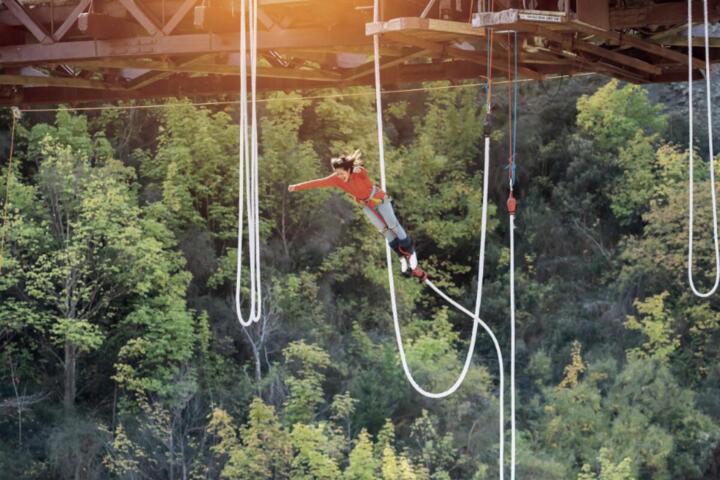
In practice, this looks like the difference between a casual bungee jump and a technical wingsuit proximity flight. For example, the Swiss Alps offer a verticality of over 3,000 meters, providing a playground where paragliding, canyoning, and speed-flying intersect within a single valley.
The industry is seeing massive growth. Statistics from the Adventure Travel Trade Association (ATTA) indicate that the hard adventure market is expanding at a compound annual growth rate (CAGR) of over 15%. Furthermore, safety has become data-driven; high-end operators now use satellite trackers like Garmin inReach to monitor athletes in remote sectors of Patagonia or the Himalayas.
Adventure Planning Failures
Many enthusiasts fall into the trap of "Instagram-led" planning, choosing locations based on aesthetics rather than technical suitability or safety protocols. This leads to several systemic issues:
Underestimating local weather patterns is the primary cause of activity cancellations and accidents. High-altitude environments, such as those in the Andes or the Alps, can shift from clear skies to 60 km/h gusts in under 20 minutes, rendering gear like lightweight paragliders or kitesurfers useless or dangerous.
Relying on unverified local guides is another significant risk. In regions with lax regulations, "expert" status is often self-appointed. This lacks the oversight of international bodies like IFMGA (International Federation of Mountain Guides Associations) or PADI for technical diving.
The consequence is often a "rescue bill" that can exceed $20,000 if your specialized travel insurance (like World Nomads or Global Rescue) doesn't explicitly cover "search and rescue" or the specific altitude of your activity.
Strategic Hubs for Elite
To maximize performance and safety, you must match your skill level with the infrastructure of the destination. Here is a breakdown of where to go and why these locations lead the world.
Technical Mountaineering and Aerials in Interlaken
Interlaken serves as the nerve center for European air sports. The geography of the Lauterbrunnen Valley, with its 800-meter sheer limestone walls, creates the perfect "exit points" for BASE jumping and technical paragliding. Operators here, such as Outdoor Interlaken, adhere to strict Swiss Safety standards. The "why" is simple: the combination of a railway that reaches 3,454 meters (Jungfraujoch) and stable valley winds allows for multiple "laps" or jumps in a single day, accelerating the learning curve significantly.
Deep-Water Soloing and Sport Climbing in Mallorca
For climbers, the Santa Ponça and Porto Cristo areas of Mallorca offer world-class Deep-Water Soloing (Psicobloc). Unlike traditional climbing, the "safety" is the Mediterranean Sea. This allows for pushing $7a$ to $8b$ grades without the psychological weight of a rope. The rock is highly textured limestone with minimal polish, providing superior friction even in the 70% humidity typical of the Balearic summer.
High-Velocity Hydrology in the Zambezi River
The Batoka Gorge below Victoria Falls is the gold standard for Grade V whitewater rafting. The "Big Drops" here are categorized by high volume and deep water, meaning that while the rapids are massive, the "consequence" of a flip is usually a long swim rather than hitting rocks. Using a reputable outfitter like Shockwave Adventures ensures you have a safety kayaker—a non-negotiable for rivers with flow rates exceeding 1,000 cubic meters per second.
Sub-Zero Exploration and Dry Suit Diving in Silfra
Iceland’s Silfra Fissure offers the world’s best visibility (exceeding 100 meters) because the water is glacial melt filtered through porous volcanic basalt for 30 to 100 years. This is "technical" not because of depth, but because of thermal management. Divers must utilize high-end dry suits from brands like Santi or Fourth Element. The 2°C water temperature requires precise buoyancy control to avoid damaging the delicate geological formations.
Gravity-Fed Biking
Whistler Blackcomb’s Bike Park is the global benchmark for downhill MTB. With over 80 kilometers of trails divided into four zones, it utilizes a lift-access system that eliminates the "climb" and focuses entirely on descent technique. The park uses a color-coded progression system (Green to Double Black Diamond) that allows riders to systematically build skills on "A-Line" jumps or "Dirt Merchant" drops.
Extreme Desert Endurance
The Atacama Crossing is a 250-kilometer, seven-day self-supported footrace. It is a masterclass in logistics and human physiology. Athletes must carry all gear and food while navigating altitudes reaching 3,000 meters. The "tool" here isn't just footwear (like Hoka Tecton X); it’s sweat-rate monitoring and electrolyte titration. Success depends on managing the 30°C temperature swings between noon and midnight.
Performance Cases
Case Study 1: The Alpine Transition
An intermediate paraglider struggled with "thermalling" in the turbulent air of the Rockies. They relocated to the Ager region in Spain for a 10-day intensive clinic with FlySpain.
- The Problem: Poor wing control in "punchy" thermal conditions.
- The Action: 40 hours of SIV (Simulation d'Incidents en Vol) training over water, using Bluetooth-integrated helmets for real-time coaching.
- The Result: A 300% increase in flight duration and the successful completion of a 50km cross-country (XC) flight, verified via XContest logs.
Case Study 2: The Vertical Progression
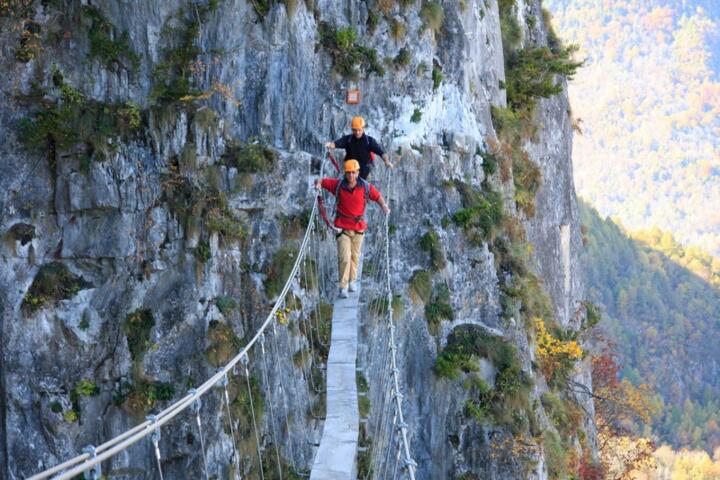
A corporate team-building group wanted a high-stakes challenge but lacked technical climbing skills. They chose the Via Ferrata systems in the Dolomites, Italy.
- The Problem: Lack of technical rope skills for traditional summits.
- The Action: Utilizing the "Iron Path" (permanently fixed cables and ladders) with Petzl Scorpio Evertree lanyards.
- The Result: Reached three peaks over 2,500 meters in four days with zero incidents, providing the "exposure" of extreme climbing with a redundant safety margin.
Adventure Matrix
| Activity | Top Destination | Best Month | Requirements & Gear |
|---|---|---|---|
| Surfing | Nazaré, Portugal | Nov - Feb | Jet Ski Support / 5mm Wetsuit |
| Ice Climbing | Ouray, Colorado | Jan - Feb | UIAGM Guide / Dual Crampons |
| Skydiving | Empuriabrava, Spain | Year-round | USPA A-License / AAD System |
| Cave Diving | Tulum, Mexico | May - Sept | Full Cave Cert / Sidemount Rig |
| Sandboarding | Huacachina, Peru | June - Aug | Basic Technique / Speed Wax |
Common Errors
The most frequent mistake is "Gear Illiteracy." Purchasing top-tier equipment like a Mammut Barryvox S beacon is useless if you haven't practiced "fine search" patterns in a controlled avalanche park.
Another error is ignoring "The Rule of Three." In extreme environments, you should never engage in high-risk activities without three layers of redundancy: a physical map/compass, a GPS device, and a satellite messenger.
Finally, many athletes fail to account for "Acclimatization Decay." If you fly from sea level to a high-altitude hub like Cusco or Kathmandu and attempt an "extreme" exertion on Day 1, your VO2 max is effectively reduced by 20-30%, significantly increasing the risk of pulmonary edema or simple exhaustion-related accidents.
FAQ
What is the best "all-in-one" destination for a multi-sport trip?
Queenstown, New Zealand, remains the leader. Within a 50-mile radius, you have access to world-class bungee jumping (Kawarau Bridge), jet boating, heli-skiing in the Remarkables, and the Southern Hemisphere's best MTB trails.
How do I verify the safety of a local operator?
Check for affiliations with international bodies. For diving, look for PADI 5-Star ratings; for mountain sports, ensure guides are IFMGA certified. Always ask for their "Liability Insurance" certificate and check the date.
What is the most common injury in extreme sports travel?
Statistically, it is not the "catastrophic fall," but rather ligament tears (ACL/MCL) in skiing/MTB and severe dehydration/heatstroke in desert or tropical environments.
Is specialized insurance really necessary?
Yes. Standard travel insurance often has an "Extreme Sports Exclusion" clause. You need a policy from a provider like DAN (for diving) or World Nomads (Explorer Plan) that specifically lists your activity.
How much should I budget for a high-end extreme adventure?
For a 10-day technical trip (e.g., heli-skiing or guided mountaineering), expect to spend $5,000–$8,000. This includes specialized gear rentals, permit fees, and certified guiding services which typically cost $500+ per day.
Author’s Insight
In my fifteen years of navigating high-consequence environments, I’ve learned that "extreme" is a relative term, but "preparation" is absolute. The best athletes I know aren't the ones taking the biggest risks; they are the ones with the most boring checklists. I once saw a seasoned climber turn back 100 meters from a summit because their satellite weather update showed a pressure drop that wasn't yet visible to the eye. That level of discipline—choosing the data over the ego—is what defines a true expert in this field. My advice: invest more in your training and "rescue insurance" than you do in your GoPro accessories.
Summary
Maximizing your adrenaline output requires a shift from being a "tourist" to being an "operator." By choosing destinations like Interlaken for aerials, Whistler for gravity sports, or the Zambezi for water-based intensity, you ensure that the environment matches your technical ambitions. Always prioritize certified instruction, utilize the Adventure Readiness Matrix for planning, and never compromise on specialized insurance. Your next peak experience is a product of rigorous logistics and respected boundaries. Stay focused, stay geared, and execute with precision.