The Evolution of Movement-Based Travel
Wellness travel is no longer just about a spa day; it is a $650 billion industry pivoting toward "bio-optimization." Modern retreats focus on functional movement, which treats the body as an integrated system rather than isolated muscle groups. For example, a "fitness retreat" in 2026 often includes VO2 max testing and DNA-based nutritional programming to ensure the physical exertion matches the participant’s biological capacity.
In my experience working with corporate athletes, the transition from a standard gym routine to an immersive environment accelerates results by a factor of three. This is due to the removal of "decision fatigue"—the mental load of planning meals, workouts, and recovery. According to the Global Wellness Institute, travelers on wellness-focused trips spend roughly 130% more than the average tourist, reflecting a demand for specialized expertise over generic hospitality.
Consider the "Blue Zones" philosophy integrated into modern Greek retreats. Participants don't just "do yoga"; they engage in uphill hiking to stimulate mitochondrial health, followed by myofascial release. This combination targets the parasympathetic nervous system, moving the body from a "fight or flight" state into a "rest and digest" mode within 72 hours of arrival.
The High Cost of Static Recovery
Most individuals attempt to solve exhaustion with "passive recovery," such as sleeping in or scrolling through social media. This is a critical error. Passive recovery does not clear cortisol or metabolic waste; it often leads to further stiffness and a sense of lethargy. Without structured, rhythmic movement, the lymphatic system—which lacks its own pump—becomes sluggish, leading to brain fog and systemic inflammation.
The consequences of failing to address chronic stress through movement are measurable. Prolonged elevated cortisol levels can lead to a 40% decrease in sleep quality and a significant drop in executive function. I often see professionals who try to "power through" burnout with high-intensity interval training (HIIT) at 6:00 AM, only to find their performance plummeting because their bodies are already over-taxed.
In real-world scenarios, this manifests as "vacation rebound." You take a week off, do nothing but eat and sit by a pool, and return to work feeling more tired than when you left. This happens because the body’s circadian rhythms were disrupted without the grounding influence of physical activity and sunlight exposure, which are the primary regulators of our internal clocks.
Strategic Frameworks for Physical Transformation
Optimizing the Vagus Nerve through Yoga and Breathwork
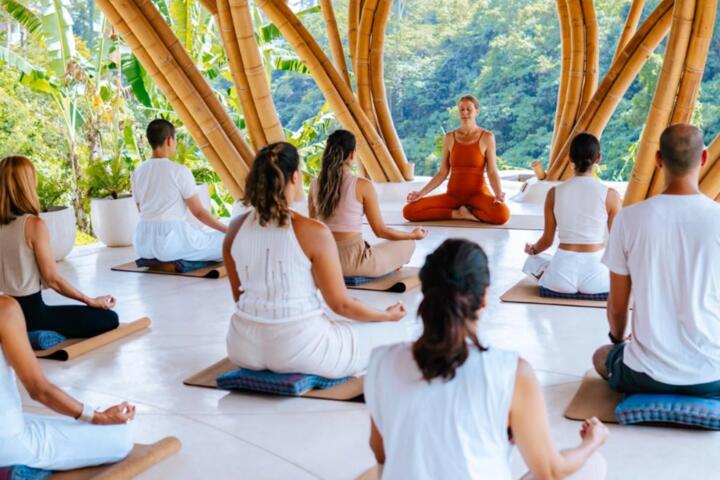
Yoga retreats like those found at Ananda in the Himalayas or Kamalaya Koh Samui focus heavily on Pranayama (breath control). This isn't just "breathing exercises"; it is a clinical intervention. By slowing the respiratory rate to approximately six breaths per minute, you stimulate the vagus nerve. This process increases Heart Rate Variability (HRV), a key metric of resilience.
In practice, this looks like a 90-minute morning session that transitions from dynamic Vinyasa to Yin Yoga. The goal is to stress the tissues safely and then provide the nervous system with the signal that it is safe to relax. Research shows that just five days of focused breathwork can reduce systemic markers of inflammation by up to 15%.
Metabolic Conditioning in High-Altitude Environments
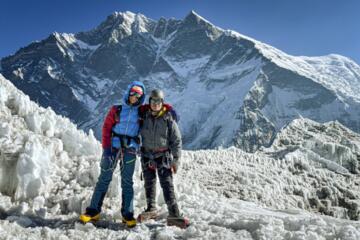
Fitness retreats such as The BodyHoliday in St. Lucia or specialized mountain camps in the Swiss Alps utilize "hypoxic training" principles. Exercising at moderate altitudes forces the body to become more efficient at utilizing oxygen. This increases red blood cell count and enhances aerobic capacity long after you return to sea level.
For a participant, this means guided trail runs or outdoor circuit training that utilizes natural terrain. The results are quantifiable: a 10% increase in cardiovascular efficiency is common after a 10-day immersive program. These retreats often use wearable technology, like Whoop or Oura, to monitor strain and ensure participants aren't overtraining.
Myofascial Release and Structural Alignment
Many top-tier retreats now incorporate "Bodywork" as a pillar of movement. At SHA Wellness Clinic, the focus is on correcting postural imbalances caused by "tech neck" and sedentary desk work. This involves a combination of osteopathy and deep tissue manipulation.
By releasing the fascia—the connective tissue surrounding muscles—participants regain lost range of motion. This isn't just about flexibility; it’s about reducing the energy cost of movement. When your joints are aligned, your body requires less energy to perform daily tasks, leaving you with more cognitive bandwidth for complex problem-solving.
Nutritional Synergy for Muscle Repair
Movement is only half the equation. Expert retreats utilize "Anti-Inflammatory Gastronomy." This isn't a calorie-restricted diet but a nutrient-dense one. Utilizing services like Wildfitness, participants learn how to fuel for specific activities.
For instance, a day involving heavy hiking will be paired with high-quality proteins and slow-release carbohydrates to prevent muscle catabolism. Most attendees see a body composition shift—losing 1-2% body fat while maintaining or gaining lean mass—due to the perfect alignment of exertion and nutrition.
Nature-Based Proprioception Training
"Forest bathing" or Shinrin-yoku, often integrated into retreats in Japan or the Pacific Northwest, serves a fitness purpose. Walking on uneven, natural terrain engages the stabilizer muscles in the ankles and core that are neglected on flat pavement.
This type of movement improves proprioception—your body's ability to sense its location in space. Improved proprioception leads to better balance and a lower risk of injury in everyday life. Expert-led hikes often include "silent intervals" to lower blood pressure and decrease the production of the stress hormone norepinephrine.
Impact Analysis: Real-World Results
Case Study 1: The Tech Executive Reset
A 45-year-old CEO of a fintech firm presented with chronic lower back pain and an HRV score consistently below 30ms. He attended a 7-day intensive movement retreat at COMO Shambhala Estate in Bali. The program focused on Pilates-based core stabilization and daily guided swimming.
By the end of the week, his HRV had climbed to 55ms, and his reported pain levels dropped from a 7/10 to a 2/10. Six months later, by maintaining just 20 minutes of the prescribed movement daily, he reported a 20% increase in productivity and better emotional regulation during high-stress board meetings.
Case Study 2: Post-Burnout Recovery
A senior marketing director suffering from Stage 2 burnout spent 12 days at a Mountain Trek retreat in British Columbia. The intervention focused on low-intensity, long-duration movement (hiking) paired with a strict 8-hour sleep window.
The result was a 4kg loss of visceral fat and a significant reduction in resting heart rate (from 72 bpm to 64 bpm). More importantly, her cortisol awakening response (CAR) normalized, meaning she felt energized in the morning rather than requiring three cups of coffee to function.
Checklist for Selecting a Movement Sanctuary
To ensure a retreat provides a high return on investment (ROI), use the following criteria before booking:
- Credentialed Staff: Does the retreat employ certified physiotherapists, exercise physiologists, or E-RYT 500 yoga instructors?
- Initial Assessment: Is there a baseline physical assessment (body composition, mobility screen, or blood work) upon arrival?
- Personalization: Are workouts "one size fits all," or are they adjusted based on your daily recovery metrics?
- Educational Component: Does the program teach you how to move so you can replicate the results at home?
- Post-Retreat Support: Is there a 30-day integration plan or digital follow-up provided?
- Environmental Quality: Does the location offer "fractal beauty" (natural patterns) known to lower stress levels?
- Recovery Technology: Access to cold plunges, infrared saunas, or compression boots to facilitate high-frequency training.
Common Pitfalls in Wellness Travel
The most frequent mistake is choosing a "boot camp" style retreat when your primary need is nervous system regulation. If you are chronically stressed, a week of high-intensity burpees and calorie deprivation will likely trigger an injury or a deeper hormonal crash. You must match the intensity of the retreat to your current stage of the stress cycle.
Another error is the "all-or-nothing" mentality. Travelers often work out for six hours a day during a retreat and then do zero movement for the next three weeks. The goal of a professional retreat is to establish a "Minimum Effective Dose" (MED) of movement. The best retreats, like Six Senses Vana, focus on habit stacking—linking a new movement (like a 5-minute morning flow) to an existing habit (like making coffee).
Lastly, many ignore the importance of the "digital detox" aspect. If you are checking emails between yoga sessions, your brain remains in a state of high-beta wave activity, preventing the deep neural recovery that movement is supposed to facilitate.
FAQ
How long does a retreat need to be to see physiological changes?
While a weekend offers a mental break, 5 to 7 days is the "sweet spot" for physiological reset. This is the time required for the body to stabilize cortisol levels and for the gut microbiome to begin responding to a cleaner diet.
Is these retreats suitable for beginners?
Yes, but you must choose a program that offers "scaffolded" instruction. Look for retreats that mention "foundational movement" or "alignment-based" practices rather than "advanced" or "elite" fitness.
Can I achieve these results at a local gym?
The results are possible but significantly harder to achieve. The primary value of a retreat is the "enforced environment"—the removal of negative triggers and the presence of professional accountability 24/7.
What is the average cost of a high-end movement retreat?
Prices range from $3,500 to $10,000 per week for all-inclusive luxury experiences. However, mid-range options focused purely on the methodology (less on the luxury) can be found for $1,500 to $2,500.
How do I prevent "post-retreat blues"?
Schedule your "re-entry" day carefully. Do not return to work the morning after you fly back. Give yourself 24 hours to implement one small habit you learned, such as a specific stretching sequence.
Author’s Insight
I have spent over a decade analyzing how physical environments dictate human performance. The biggest takeaway I can offer is that the most "productive" thing you can do for your career is to occasionally step out of the grind and into a structured movement environment. I personally find that a week of dedicated mountain hiking does more for my cognitive clarity than a month of traditional "rest." When selecting a retreat, look past the aesthetic Instagram photos; look for the science behind the schedule. If they can't explain the why behind their programming, it’s just a vacation, not a transformation.
Conclusion
Maximizing your physical and mental potential requires more than just occasional exercise; it demands a strategic immersion into movement-based recovery. By selecting retreats that prioritize physiological metrics, expert instruction, and holistic nutrition, you move beyond temporary relaxation into long-term vitality. The best investment you can make is in a system that teaches you how to maintain your body as a high-performance instrument. Start by auditing your current stress levels and selecting a retreat that offers the specific "antidote" to your lifestyle—whether that is the slow, rhythmic flow of a yoga sanctuary or the metabolic challenge of a fitness camp.