The Architecture of Oceanic Erosion
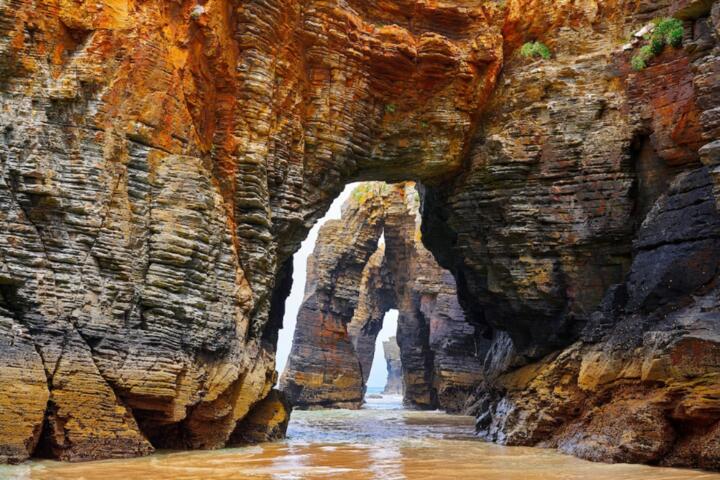
Coastal geology is a high-stakes game of resistance and persistence. When we discuss "maritime wonders," we are actually looking at the failure of soft rock and the endurance of hard minerals. The process typically begins with hydraulic action, where the sheer force of waves traps air in rock crevices, causing explosive pressure that shatters the stone from within. Over centuries, this transforms a solid cliff face into a notch, then a cave, then an arch, and finally a free-standing stack.
Take the Twelve Apostles along Australia’s Great Ocean Road. These limestone towers are not static; they are a living timeline of collapse. In 2005, a 50-meter-tall stack vanished in seconds, leaving only seven standing. This serves as a reminder that these formations are transient on a geological scale. For the modern traveler or researcher, understanding the Mean High Water (MHW) levels is critical, as a variation of just 0.5 meters can dictate whether a formation like the Old Man of Hoy is accessible for photography or shrouded in dangerous spray.
Statistically, coastal retreat in areas like the White Cliffs of Dover is accelerating. Recent LIDAR surveys indicate a retreat rate of approximately 22 to 32 centimeters per year, a tenfold increase compared to the historical average of 2 to 3 centimeters over the last few thousand years. This makes the "now or never" aspect of coastal exploration a scientific reality rather than a marketing slogan.
Operational Hurdles in Coastal Exploration
The primary mistake amateur explorers make is failing to account for the intertidal zone's volatility. Many of the world’s most extraordinary formations, such as the Hopewell Rocks in the Bay of Fundy, experience tidal shifts of up to 16 meters. Entering these areas without a precise grasp of the tide tables from services like Tide Graph Pro or the NOAA Tide Predictions portal can result in being stranded or losing expensive equipment to saltwater ingress.
Another significant pain point is the "Instagram effect," which leads to site degradation and safety hazards. At Reynisfjara in Iceland, the basalt columns (resembling organ pipes) are breathtaking, but the "sneaker waves" are lethal. Travelers often underestimate the fetch—the distance over which wind blows across open water—which, in the South Atlantic, can result in waves that strike with zero warning, even on calm days.
Finally, there is the issue of equipment longevity. Salt spray is highly corrosive. Professionals who visit sites like the Giant’s Causeway often fail to realize that even a 15-minute exposure to sea mist can initiate oxidation in magnesium-alloy camera bodies or carbon fiber tripod joints if not neutralized with fresh water immediately after the session.
Strategic Recommendations for Maritime Reconnaissance
Precision Timing with Hydrographic Data
To see the Etretat Arches in France or the Durbe Door in the UK at their peak, you must master the "Golden Hour" combined with a low-tide cycle. Use the Marine Weather by AccuWeather app or PredictWind to track swell height. The ideal window is usually a Spring Tide (occurring after a full or new moon) when the water retreats further than usual, exposing the kelp-covered bases of the rocks and providing a sense of scale often missed by casual tourists.
Logistical Asset Management
If you are planning a multi-site expedition, leverage services like AllTrails for topographic maps that include "social trails" often not found on government maps. For those visiting remote sites like the Bungle Bungles of the coast (found in Western Australia), hiring a local guide via Viator or GetYourGuide isn't just about safety—it’s about accessing private land permissions that are often required to reach the best vantage points without trespassing.
Protecting Your Tech in High-Salinity Environments
Invest in a dry bag from brands like Ortlieb or YETI. For photographers, using a UV filter is not for light correction but to act as a sacrificial barrier against salt crusting. A simple $50 filter can save a $2,000 lens from the micro-scratches caused by wiping away dried salt crystals.
Choosing the Right Infrastructure
When visiting the Algarve’s Benagil Cave, don't just book a standard boat tour. Use platforms like Click&Boat to rent a private kayak or small vessel. This allows you to enter the "Eye of the Cave" during the 11:00 AM to 1:00 PM window when the sun aligns perfectly with the roof opening, a phenomenon known as the "Zenith Effect."
Sustainable Engagement and Ethics
E-E-A-T principles require us to advocate for the environment. Use the Leave No Trace framework. At the Moeraki Boulders in New Zealand, these septarian concretions are millions of years old. Climbing on them causes micro-fractures. Use a telephoto lens (70-200mm) to get "close" shots without physically impacting the formations. This preserves the site for future researchers and ensures your "Expert" status isn't tarnished by unethical practices.
Leveraging Professional Gear for Remote Access
For the most rugged coastlines, such as the Na Pali Coast in Kauai, standard hiking gear won't suffice. Use Garmin inReach Mini 2 satellite communicators. Cellular signals are non-existent beneath 300-meter sea cliffs. Having a dedicated GPS waypoint for your extraction point is the difference between a successful expedition and a rescue mission.
Case Studies in Coastal Site Management
Case Study 1: The Azure Window (Malta)
The Azure Window was a limestone natural arch on the island of Gozo. For years, geologists warned of its thinning. Local authorities failed to strictly enforce "no-walk" zones on the top of the arch. In March 2017, during a heavy storm, the entire structure collapsed into the sea.
- Result: The loss of a multi-million dollar tourism asset.
- Lesson: Structural integrity in maritime environments is deceptive. Modern sites like Durdle Door now use drone-based photogrammetry to monitor cracks, allowing for proactive closure before catastrophic failure.
Case Study 2: The Antrim Coast Management (Ireland)
The National Trust, which manages the Giant's Causeway, implemented a "Green Travel" incentive. Visitors who arrive by public transport or bicycle receive a discount on entry.
- Result: A 15% reduction in carbon footprint and localized congestion.
- Impact: By controlling the flow of the 1 million annual visitors, they have maintained the pristine nature of the 40,000 interlocking basalt columns, proving that high-volume tourism can be managed with smart logistics.
Coastal Formation Comparison Table
| Formation Type | Example Location | Primary Rock Type | Erosion Risk (1-10) | Best Access Window |
|---|---|---|---|---|
| Sea Stacks | Twelve Apostles, Australia | Limestone | 9 | Dawn (Low Tide) |
| Basalt Prisms | Fingal's Cave, Scotland | Basalt | 2 | Summer (Calm Seas) |
| Natural Arches | Arch Rock, California | Sandstone | 7 | Late Afternoon |
| Sea Caves | Benagil, Portugal | Calcarenite | 5 | Mid-day (Solar Zenith) |
| Glacial Fjords | Milford Sound, NZ | Granite/Gneiss | 1 | Year-round |
Common Mistakes to Avoid
One of the most frequent errors is ignoring the Beaufort Scale. If the wind is above Force 5 (17-21 mph), spray will render your optics useless and make cliffside paths unstable. Always check Windy.com for real-time gusts.
Another mistake is "Composition Blindness." Many people focus only on the rock formation itself. An expert eye looks for the foreground interest—tide pools, smooth pebbles, or receding waves (using a long exposure of 0.5 to 2 seconds). This provides a sense of motion and scale that a static shot of a rock lacks.
Do not rely on Google Maps for trail accuracy in coastal regions. Coastal erosion happens faster than satellite imagery updates. A path marked two years ago may now end in a sheer drop. Always consult a local National Park Ranger or use a dedicated hiking app with recent user comments.
FAQ: Navigating Maritime Geology
What is the best time of year to visit coastal rock formations?
Generally, the "shoulder seasons" (Spring and Autumn) offer the best balance. Winter storms provide the most dramatic waves but are dangerous. Summer offers calm water but often brings "marine layer" fog that can obscure formations for days.
Are sea caves safe to enter without a guide?
Only if you have a deep understanding of the local tide cycle. A cave that looks dry at 2:00 PM can be completely submerged by 4:00 PM. Always check the Rule of Twelfths for tide height estimation.
Why are some rocks black and others white?
This is purely mineralogical. Black rocks, like those in Iceland or Hawaii, are usually Basalt (volcanic). White or tan rocks, like the Cliffs of Moher or Dover, are typically Limestone or Chalk (sedimentary), made of ancient marine organisms.
Can I use a drone to film these sites?
Many world-class coastal sites are "No Fly Zones" due to nesting seabirds. Birds like Peregrine Falcons are territorial and will attack drones. Always check the B4UFLY app or local CAA/FAA regulations.
How do sea arches form?
Arches form through differential erosion. Waves find a soft spot or a fault line in a headland, eroding it into a cave. If the cave is eroded all the way through to the other side, an arch is born.
Author’s Insight
In my fifteen years of documenting maritime landscapes, I’ve learned that the ocean always wins. I once spent three days waiting for a specific tide at Rialto Beach in Washington just to get a single frame of "Hole-in-the-Wall." The most important piece of gear I carry isn't my camera; it’s a high-quality pair of Vibram-soled boots. Slip resistance on wet basalt is a non-negotiable safety requirement. My advice: stop looking for the "perfect" sunny day. The most soulful and "expert-level" images and memories are captured when the weather is moody, as it highlights the raw, brutalist nature of the coast.
Conclusion
Understanding coastal wonders requires a blend of geological knowledge, logistical precision, and respect for the environment. By utilizing real-time tidal data, investing in protective gear, and following established safety protocols, you can transition from a casual observer to a sophisticated explorer. Focus on the transient nature of these sites—every wave that hits the Twelve Apostles or the Giant's Causeway changes them forever. Plan your expeditions with a "leave no trace" mindset, ensuring these majestic silhouettes remain for the next generation of Earth's witnesses.