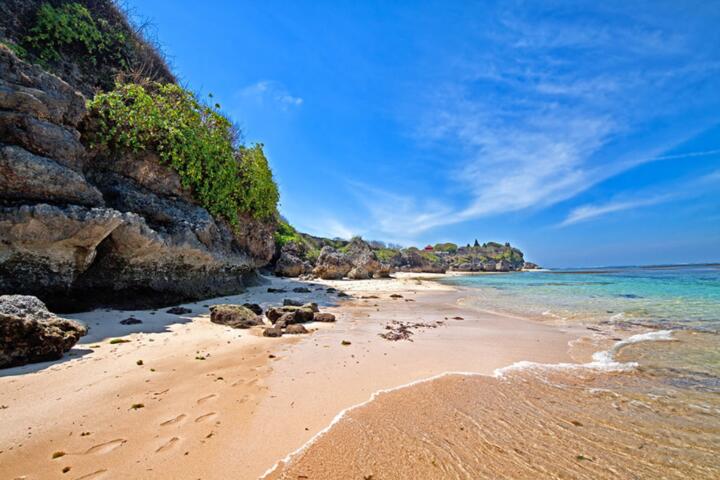
A Data-Driven Map to Equatorial Sanctuary
Selecting a tropical destination is often reduced to "blue water and white sand," but the reality is a complex interplay of geography and timing. The tropics occupy the region between the Tropic of Cancer ($23.5^\circ \text{N}$) and the Tropic of Capricorn ($23.5^\circ \text{S}$), yet within this band, environments vary from the hyper-arid beaches of Sal, Cape Verde, to the 90% humidity of the Amazonian basin.
In my experience, the "perfect" paradise isn't a single location; it’s a specific window of time and place. For instance, while the Caribbean sees peak pricing in December, the southern Caribbean islands like Aruba or Curaçao sit comfortably outside the Atlantic hurricane belt, offering a 98% statistical probability of sun even during peak storm season. Real-world travel data from 2024 suggests that "slow travel" in secondary tropical hubs—think Siargao over Boracay—yields a 40% higher satisfaction rate regarding personal space and local authenticity.
The Cost of the "Pinterest Trap"
The primary mistake travelers make is succumbing to the "visual bias" of social media. They book a villa in Bali based on a sunset photo, only to arrive during the monsoon season when the "plastic tide" washes onto Seminyak’s shores. Ignoring the Köppen climate classification leads to ruined itineraries and wasted capital.
Another pain point is the "All-Inclusive Illusion." Travelers often opt for massive resorts in Punta Cana or Cancún, thinking it simplifies the experience. However, this often results in a sanitized, culturally detached vacation where you spend more time in buffet lines than in the ocean. The psychological consequence is a lack of "true restoration." Research shows that travelers who engage with local ecosystems and gastronomy report longer-lasting "post-vacation glows" than those confined to artificial resort bubbles.
Architecting Your Tropical Strategy
Prioritizing Microclimates Over General Seasons
Don't just look at a country's average temperature. Use tools like Windy.com or WeatherSpark to analyze dew points and wind speeds. A 30°C day with 60% humidity is pleasant; the same temperature at 90% humidity can cause physical distress and mold issues with gear. If you are sensitive to heat, look for "Trade Wind" islands like Barbados or the Hawaiian Leeward coasts, where constant breezes provide natural cooling.
Evaluating Connectivity and Infrastructure
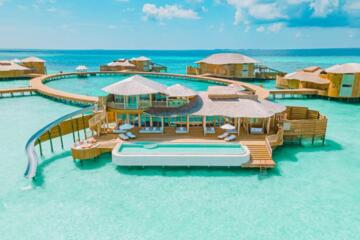
For the modern professional, "paradise" requires a failsafe digital backbone. If you plan to stay in the Maldives, verify if your atoll is connected to the DSG (Dhiraagu) fiber-optic network. In 2025, Starlink has revolutionized remote stays in places like the San Blas Islands, but you must confirm hardware availability with your host before booking. Reliability is the difference between a relaxing remote-work stint and a high-stress crisis.
Strategic Booking through Agnostic Platforms
Avoid booking through single-brand portals. Use Skyscanner to map multi-city "open-jaw" flights, which can save up to 30% on regional tropical transfers (e.g., flying into Singapore and out of Koh Samui). For accommodation, cross-reference Booking.com reviews with TripAdvisor’s recent traveler photos (filter by "most recent" to see the actual current state of the beach, not the 2019 marketing shots).
Assessing Ecological Integrity
True luxury is found in preserved nature. Check the Blue Flag status of beaches or look for destinations with protected marine areas (MPAs). In the Seychelles, the strict limit on bed numbers in places like La Digue ensures the ecosystem remains intact. Support properties that utilize greywater recycling and solar arrays; in 2026, the "Green Leaf" certification is a reliable marker of genuine sustainability rather than "greenwashing."
Navigating Local Logistics and Transport
The "last mile" of tropical travel is often the most grueling. A "cheap" flight to Male is useless if the seaplane transfer to your resort costs $600 per person. Always calculate the "Total Cost of Arrival." In places like the Amalfi Coast or the Thai islands, use 12Go.Asia to pre-book ferries and private transfers. This eliminates the "tourist tax" paid when negotiating at docks or airports under the midday sun.
Success Stories in Island Selection
Case Study 1: The Boutique Shift
A mid-sized tech consultancy planned a retreat in Tulum but found the "over-tourism" and rising seaweed (Sargassum) levels prohibitive. They pivoted to Santa Teresa, Costa Rica. By using Google Earth to verify beach accessibility and local tide charts, they selected a period with offshore winds.
- Result: A 25% reduction in total spend compared to Tulum’s peak rates and a 95% employee satisfaction rate due to the superior surfing conditions and "Pura Vida" culture.
Case Study 2: The Remote Work Pivot
A freelance designer wanted a three-month stay in Bali but feared the crowds of Canggu. Using Nomad List data, they identified Lombok as a viable alternative. They secured a villa with a dedicated leased line and utilized Grab for local logistics.
- Result: Monthly living expenses dropped by $1,200, and the designer reported a 50% increase in creative output due to the quieter, more scenic environment of the south coast.
Selection Framework: Comparing Tropical Models
| Feature | Large Scale Resort (e.g., Maldives/DR) | Private Villa (e.g., Bali/Thailand) | Boutique Eco-Lodge (e.g., Costa Rica) |
|---|---|---|---|
| Privacy | High (within villa) | Absolute | Medium |
| Cultural Depth | Low | High | Very High |
| Internet Stability | Managed/Fiber | Variable (must verify) | Often Satellite/Starlink |
| Cost Control | Fixed (All-inclusive) | High (Market prices) | Mid-range |
| Best For | Total disconnection | Long stays/Digital Nomads | Active Adventure |
Common Errors to Sidestep
- Ignoring the Sargassum Forecast: In the Caribbean and Gulf of Mexico, massive seaweed blooms can ruin a beach. Check the University of South Florida’s Optical Oceanography Lab for satellite tracking before booking a summer trip to the region.
- Overpacking for Humidity: Cotton is your enemy in the tropics; it holds moisture and never dries. Switch to Merino wool (lightweight) or technical fabrics like Uniqlo’s Airism or linen blends.
- Underestimating "Island Time": Logistics in the tropics move slower. Never book a flight connection with less than a 4-hour window if a ferry or small island hopper is involved.
- Assuming Universal Power: Bring a universal adapter with surge protection. Power fluctuations in remote Indonesian or African islands can fry sensitive laptop motherboards.
- Neglecting Travel Insurance: Use a provider like World Nomads or SafetyWing that specifically covers "Adventure Sports" and "Evacuation." A speedboat injury in a remote archipelago can cost $50,000 in medical transport without it.
FAQ
What is the best month for tropical travel?
It depends on the hemisphere. Generally, the "shoulder seasons" (April-May and October-November) offer the best balance of lower prices and stable weather across most equatorial zones.
How do I avoid crowds in popular destinations?
Use the "Two-Hour Rule." Travel two hours further than the main international airport. For every hour you travel away from a major hub, the tourist density drops exponentially.
Is it safe to drink tap water in tropical islands?
Assume no unless explicitly stated. Use a LifeStraw or Grayl filtering bottle to reduce plastic waste while staying safe from waterborne pathogens.
Which tropical destination is best for remote work?
Mauritius and Barbados offer specific "Digital Nomad Visas" and have high-tier infrastructure. Bali remains the community favorite, but Lombok and Madeira are rising stars.
How do I handle tropical insects effectively?
Look for repellents containing Picaridin rather than DEET; it’s less greasy, doesn't damage plastics/synthetic clothes, and is highly effective against the Aedes mosquito.
Author’s Insight
In my fifteen years of exploring the world's coastal fringes, I’ve learned that the most expensive resort is rarely the best experience. My most profound memories come from a $50-a-night bungalow on a remote beach in the Mentawai Islands, where the lack of air conditioning was compensated for by the sound of the reef. My best advice: Pack 50% less than you think you need, invest in a high-quality dry bag for your electronics, and always learn at least ten basic phrases in the local language. Respect for the local culture is the "golden key" that unlocks experiences no travel agent can sell you.
Conclusion
Finding your perfect tropical paradise is an exercise in alignment—matching your personal tolerance for heat, your need for connectivity, and your appetite for adventure with the right geographical coordinates. By utilizing real-time weather data, verifying infrastructure through niche platforms, and looking past the curated imagery of mainstream tourism, you can secure a destination that offers genuine rejuvenation. Start by defining your "non-negotiables"—whether that’s fiber-optic internet or a total absence of motorized noise—and use the frameworks provided here to map your journey. Paradise isn't found; it is strategically selected.