The Multi-Gen Luxury Shift
The global luxury hospitality sector is navigating an unprecedented demographic evolution. Wealthy millennial and Generation X travelers, defined by liquid net worths exceeding five million dollars, are increasingly traveling with multi-generational cohorts. According to market data from Park Hotels & Resorts, the luxury family segment stands as the fastest-growing sub-segment in premium sun-and-beach destinations, with affluent family travelers demonstrating a willingness to pay up to 25% premium for highly personalized, frictionless multi-generational layouts.
For top-tier assets, this influx presents an intense spatial conflict. The traditional ultra-luxury traveler pays a premium for silence, minimal visual clutter, and absolute privacy. Introducing multi-generational family units into an unpartitioned luxury footprint risks immediate brand erosion, negative TripAdvisor or Forbes Travel Guide reviews, and a subsequent drop in average daily rate (ADR) or customer retention.
Resolving this spatial tension requires data-driven master planning rather than superficial fixes. Sophisticated luxury beach properties, such as Ikos Olivia in Greece or The St. Regis Bali Resort, prove that families and high-net-worth couples can seamlessly coexist. The solution lies in advanced zoning: engineering dedicated, high-fidelity family enclaves that isolate high-energy activities while capturing premium ancillary revenue across every square meter of the resort footprint.
The Shared Space Conflict
The primary pitfall in modern resort design is the reliance on a single, shared beachfront or pool deck. When children, teens, and affluent couples are funneled into a singular recreational area, guest dissatisfaction inevitably surges. High-end travelers seeking low-dopamine relaxation are forced into immediate proximity with high-energy child recreation, destroying the property's promised atmosphere of premium seclusion.
Many legacy operators attempt to solve this by installing standard children's clubs in remote, marginalized corners of the property. This structural error ignores modern guest behavior analytics. High-net-worth parents do not want to abandon their children in an uninspired, indoor childcare room; instead, they seek structured, parallel experiences where they can enjoy high-end amenities while keeping their children safe and deeply engaged nearby.
When family spaces are poorly designed, children inevitably overflow into adult sanctuaries like infinity pools, fine dining venues, and premium beach cabanas. This spatial spillover triggers a measurable decline in guest retention rates. Internal hospitality audit metrics show that unmanaged acoustic cross-contamination between family play areas and adult relaxation zones can reduce premium spa and poolside beverage revenue by up to 18% due to premature guest departures.
Engineering High-End Family Zones
Acoustic Buffer Landscaping
Mitigating audio spillover is the foundational step in elite resort master planning. Sound travels exceptionally well over open water and sand, meaning a children's splash pad located 50 meters away can still disrupt an adult cabana deck. To counter this, properties must deploy natural acoustic baffles, utilizing dense vegetation, engineered elevation changes, and strategic water soundscapes.
In practice, developers should construct terraced sand dunes, dense mangrove walls, or install continuous white-noise water features, such as cascading rock pools, between the family zone and adult sanctuaries. By utilizing these natural barriers, acoustic testing indicates that mid-frequency ambient noise can be dampened by up to 12 decibels, ensuring adult relaxation areas retain an atmosphere of complete quietude.
Micro-Zoned Beach Footprints
Modern luxury beach layouts must segment the shoreline into distinct operational micro-zones. This involves splitting the sand into three clear territories: an ultra-quiet adult sanctuary, a central family beach hub, and a high-energy water sports launch area. Each zone must be entirely self-contained with its own dedicated infrastructure, concierges, and dining concepts.
The family beach zone requires specific adjustments, such as wide boardwalk access for luxury strollers (like Bugaboo or Uppababy models) and custom shaded beach pavilions that protect infants from UV rays. By providing these dedicated amenities in the family zone, parents naturally gravitate away from the adult-only beach segments, preserving the territorial separation without requiring aggressive, explicit security enforcement.
Elevated Age-Segmented Clubs
Luxury kids clubs must abandon the "playroom" model and pivot toward immersive, culturally integrated educational academies. Elite operators segment youth programming into highly specific cohorts: toddlers (ages 1–3), children (ages 4–11), and teenagers (ages 12–17). Each group requires a completely distinct architectural environment and custom programming.
For younger children, partnerships with premium educational brands provide a major competitive advantage. For older teenagers, the space must mimic a high-end, tech-forward lounge rather than a game room. By integrating professional production gear, content creation studios, or advanced marine biology labs, resorts successfully capture the attention of older youth, preventing them from wandering into adult-only spaces out of boredom.
Parallel Dining Environments
Food and beverage revenue drops when parents feel uncomfortable bringing children to dinner, or when adult couples are disturbed by crying infants. High-performing luxury resorts design parallel dining concepts, placing a family-oriented casual bistro directly adjacent to, but visually and acoustically isolated from, an upscale fine-dining restaurant.
This allows families to enjoy premium menus featuring locally sourced ingredients without the anxiety of disrupting an intimate evening next door. Furthermore, the family dining zone should include a secure, monitored play alcove nearby. Parents can dine at an unhurried pace while their children are safely entertained within line of sight, expanding the average guest's dining duration and increasing secondary spend on premium wine and spirits.
Integrated Multi-Bedroom Villas
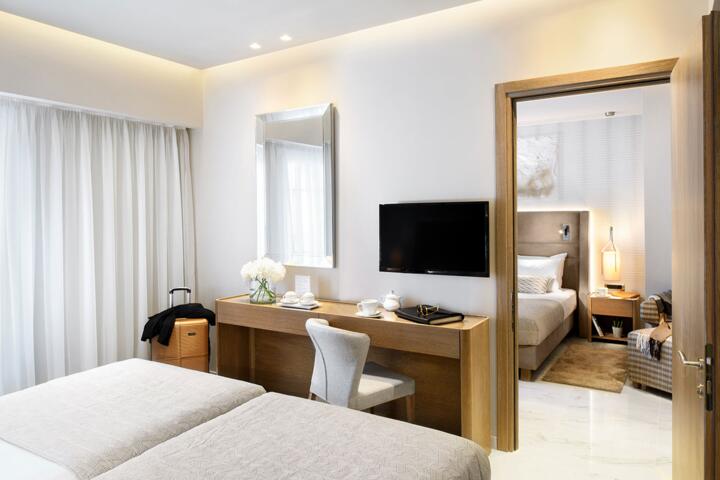
Accommodation architecture must match these sophisticated zoning strategies. The demand for multi-bedroom luxury villas with private plunge pools has surged among affluent multi-generational groups. Properties like the upcoming Rosewood Blue Palace or Six Senses Amaala are deliberately structuring their inventories to include high percentages of multi-key residential suites.
These units must feature expansive central living quarters paired with completely separated master wings, providing grandparents, parents, and children with independent privacy under a single roof. Incorporating private butler kitchens allows for seamless, in-villa family dining managed by a dedicated butler, which significantly reduces the physical footprint of families in the main resort dining rooms during peak breakfast hours.
Spatial Performance Case Studies
An elite Mediterranean island resort underwent a major capital expenditure restructuring to address dropping guest return rates among affluent couples. The asset manager allocated 4.2 million dollars to completely re-engineer their unsegmented pool and beach frontage into distinct, heavily buffered adult and family ecosystems.
Within twelve months of completing the project, the resort recorded an 14% increase in overall property ADR. More importantly, the clear spatial separation led to a 26% increase in poolside food and beverage revenue within the adult zone, as guests extended their lounge times without the disruption of child-related noise. Concurrently, family guest satisfaction scores surged by 31%, driven by the newly installed premium youth facilities.
Similarly, a luxury resort property in the Caribbean implemented an integrated family beach pavilion concept coupled with age-segmented teen lounges. By providing specialized spaces for older youth, the property reduced guest complaints regarding pool disruptions to zero. The asset realized a full return on investment within two operating seasons, driven by a surge in multi-generational villa bookings and elevated ancillary spend across the resort's premium restaurants.
Zoning Efficiency Matrix
| Zone Type | Acoustic Target | Ancillary Focus | Key Amenity |
|---|---|---|---|
| Adult-Only | < 45 decibels | Premium Spirits | Private Cabanas |
| Family Hub | 60-65 decibels | Casual Dining | Shaded Pavilions |
| Youth Club | Isolated Indoor | Curated Classes | Tech Lounges |
| Sports Zone | Unrestricted Noise | Equipment Rental | Boat Launches |
Avoid Operational Oversights
A critical operational mistake is deploying overly aggressive, negative signage to police guest boundaries. Placing stark "No Children Allowed" signs across a luxury property damages the warm, welcoming atmosphere essential to luxury hospitality. Instead, use soft, intuitive design cues, such as changing the flooring material from casual teak wood to elegant polished stone, to signal a transition into adult-only spaces.
Another common mistake is underestimating the logistics of the family zone. If a family beach hub lacks nearby restroom facilities equipped with high-end changing tables, parents are forced to trek back to the main lobby or their villas. This logistical gap leads to unexpected foot traffic and diaper disposal issues in areas intended for fine dining or quiet relaxation.
Finally, avoid understaffing the youth academies during seasonal travel peaks. When guest-to-staff ratios in kids clubs drop, safety standards can slip, and the overall experience rapidly degrades into simple babysitting. To maintain the standards expected by high-net-worth families, maintain a strict one-to-four staff ratio for younger cohorts, employing certified, multilingual educators rather than seasonal workers.
FAQ
How far apart should zones be?
A minimum physical separation of 60 to 80 meters is recommended, provided it is supported by dense landscaping or structural elevation changes. If the property has limited acreage, clear vertical separation or heavy acoustic walls disguised as art installations can achieve similar isolation results.
Are teen lounges profitable?
While they don't always generate direct entry fees, they drive overall property profitability by making the resort highly attractive to multi-generational groups. Additionally, modern teen lounges can generate ancillary revenue through premium mocktail bars, high-end retail merchandising, and paid digital media masterclasses.
Should family zones be all-inclusive?
Ultra-luxury properties are increasingly adopting hyper-premium all-inclusive models for family zones, bundling gourmet dining, youth academies, and non-motorized water sports into the villa rate. This setup reduces payment friction during the stay, allowing families to enjoy amenities freely without constantly signing receipts.
How do we handle shared pools?
If building separate pools is structurally impossible, use time-based allocation. Designate early morning and late afternoon windows for fitness and quiet swimming, while reserving midday blocks for family recreation. However, long-term asset value is best secured by building dedicated, structurally independent pool footprints.
What about safety standards?
Luxury family zones require advanced, non-intrusive safety features. This includes installing soft-fall natural materials beneath play structures, deploying professional lifeguards using low-profile observation points, and utilizing secure RFID wristbands that alert resort security if a child exits the designated family footprint.
Author's Insight
Over my two decades in luxury resort development, I have watched the industry transition from treating children as an afterthought to recognizing them as powerful decision-makers. Affluent parents rely heavily on their children's feedback when choosing a holiday destination. If a child feels bored or unwelcome, the family will not return. True luxury is not about excluding families; it is about engineering intelligent spaces where high-energy play and deep relaxation run on perfectly parallel tracks, completely independent of each other.
Summary
Maximizing revenue and guest satisfaction in modern luxury beach resorts requires an uncompromising commitment to data-driven zoning. By separating family hubs from adult sanctuaries through acoustic landscaping, micro-zoned beaches, and parallel dining environments, operators protect their core asset values. Review your resort's current spatial layout today and identify areas of guest friction. Investing in dedicated family infrastructure is the most reliable way to secure multi-generational loyalty, elevate ADR, and maximize long-term RevPAR.