Narrative-Driven Travel
Narrative tourism—often termed literary travel—is the practice of visiting sites that served as the inspiration for, or the setting of, famous written works. It is more than just "seeing the sights"; it is a pursuit of atmosphere and historical resonance. According to data from the World Tourism Organization, cultural tourism accounts for nearly 40% of global travel, with "intellectual interest" being a primary driver for solo travelers aged 25–45.
For instance, the city of Bath, England, sees over 5.8 million visitors annually, a significant portion of whom arrive specifically to walk the cobblestones frequented by Jane Austen’s characters. Similarly, Cartagena, Colombia, has seen a surge in "Macondo seekers" looking for the magical realism of Gabriel García Márquez. This form of travel requires a shift in perspective: you are not just a tourist; you are a researcher, a fan, and a guest in a writer’s curated world.
Recent industry reports from Skift suggest that "passion-led" travel—where the itinerary is dictated by a specific hobby or interest—yields 22% higher satisfaction rates than general leisure travel. This is because the emotional connection to a book provides a ready-made framework for the trip, eliminating the "choice paralysis" often found in modern tourism.
Bibliophilic Pitfalls
Many travelers fail to distinguish between a "filming location" and a "literary setting," leading to profound disappointment. For example, visiting the Warner Bros. Studio Tour in London is a cinematic experience, but it provides little insight into the 1990s Edinburgh culture that birthed the original Harry Potter manuscripts at The Elephant House or Greyfriars Kirkyard.
A common mistake is over-reliance on "Top 10" listicles that aggregate generic locations without verifying their current accessibility or relevance. Relying on outdated blogs can result in arriving at a private residence or a demolished landmark. Furthermore, travelers often ignore the seasonality of a book’s setting; visiting the Yorkshire Moors in mid-summer will never capture the desolate, brooding energy of Emily Brontë’s Wuthering Heights, which demands the harsh light of late autumn or winter.
The consequence of poor planning is "narrative dissonance"—the feeling that the real world doesn't live up to the prose. Without deep research, you risk spending thousands of dollars on a trip that feels like a generic city tour rather than a deep dive into your favorite protagonist’s psyche.
Authentic Strategies
Curate a Primary Source Itinerary
Don't just Google "Sherlock Holmes London." Instead, use tools like OpenLibrary or Project Gutenberg to cross-reference specific street names and landmarks mentioned in the original texts. Create a custom map in Google Maps My Maps to plot these coordinates. In London, this would mean looking past the commercialized Sherlock Holmes Museum on Baker Street and finding the actual chemical laboratory at St. Bartholomew’s Hospital where Watson first met Holmes.
Leverage Specialized Niche Operators
While DIY planning is rewarding, certain regions require local expertise. Companies like Zicasso or The Literary Traveler offer bespoke itineraries that grant access to private estates or archives. In Dublin, the James Joyce Centre offers walking tours that go beyond the surface, explaining the complex socio-political context of Ulysses while you stand in front of Eccles Street.
Utilize Digital Literary Mapping Tools
Platforms like Literature Map and Place-Based Stories allow you to see the density of literary connections in a specific city. If you are heading to Paris, use The Earful Tower podcast or blog to find the exact tables at Les Deux Magots where Hemingway and Fitzgerald argued over manuscripts. Seeing the physical proximity of these creators changes your understanding of the "Lost Generation."
Engage with "Living History" Accommodations
Stay in hotels that have actual literary pedigree. The Pera Palace Hotel in Istanbul isn't just a luxury stay; it is where Agatha Christie allegedly wrote Murder on the Orient Express. Staying in Room 411 provides a tactile connection that a day-trip cannot replicate. Use Booking.com filters for "historic" or "boutique" to find these gems, but always verify the history through the hotel’s own digital archives or a quick search on JSTOR.
Master the Art of the "Re-Read" on Site
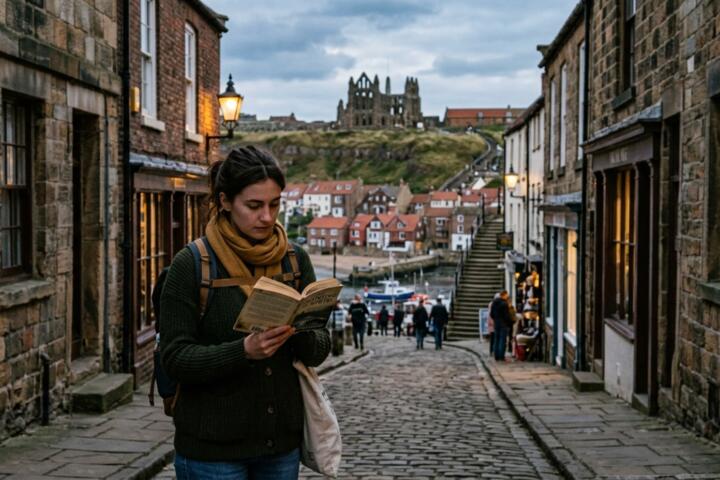
Carry a physical copy or a Kindle loaded with the specific book. There is a documented psychological effect called "situated cognition," where reading descriptions of a landscape while physically standing in it enhances memory retention and emotional impact. In the Lake District, reading William Wordsworth’s poetry at Dove Cottage provides a sensory feedback loop that is impossible to achieve in a library.
Literary Success Stories
Case Study: The Joyce Initiative
A boutique travel agency in Ireland, Literature & Landscapes, noticed a decline in young travelers visiting Joyce-related sites. They shifted from traditional bus tours to "Ulysses Audio-Sync" walking tours using Pocket Casts and geolocation.
- Action: They mapped the 18 episodes of the book to specific Dublin GPS coordinates, providing 5-minute narrated excerpts at each stop.
- Result: They saw a 45% increase in bookings from the 18–35 demographic and a 30% increase in social media mentions, proving that digitizing the literary experience increases engagement.
Case Study: The New England "Gothic" Trail
A regional tourism board in Massachusetts combined the settings of H.P. Lovecraft, Nathaniel Hawthorne, and Edith Wharton into a single "Spooky Season" driving route.
- Action: They partnered with local independent bookstores like The House of the Seven Gables shop to offer a "Passport" program.
- Result: The trail generated $1.2 million in off-season revenue for local B&Bs, demonstrating that niche literary branding can revitalize local economies outside of peak summer months.
Strategic Comparison
| Feature | Specialized Literary Tour | Independent "DIY" Journey |
|---|---|---|
| Average Cost | $300 - $600 per day | $100 - $250 per day |
| Depth of Info | Academic/Expert Level | Variable (depends on your research) |
| Access | Often includes private libraries/homes | Mostly public landmarks |
| Flexibility | Rigid schedule | Fully customizable |
| Best For | Rare manuscripts, hidden history | Atmospheric wandering, photography |
| Recommended Tool | Context Travel | Atlas Obscura + TripAdvisor |
Common Travel Mistakes
- The "Museum Trap": Many "literary museums" are just gift shops with a few posters. Research the "Collections" page on the museum’s website first. If they don't list actual artifacts or manuscripts, skip it and go to the local cemetery or park mentioned in the book.
- Ignoring the Author’s Biography: A setting is often a reflection of the author’s life, not just the plot. To understand The Great Gatsby, you need to visit West Egg (Great Neck, Long Island), but you also need to see the Princeton University archives where F. Scott Fitzgerald's letters are held.
- Poor Timing: Research "Literary Festivals." Visiting Hay-on-Wye in Wales is a book lover's dream, but during the Hay Festival, prices quadruple and the "quiet book town" vibe disappears. Go two weeks before or after for the authentic experience.
- Over-Scheduling: Don't try to hit five sites in one day. Literary travel is about "slow travel." Spend three hours in one café where a famous chapter was written rather than ten minutes at five different houses.
FAQ
What is the best city for a first-time literary trip?
Edinburgh, Scotland. It was the world's first UNESCO City of Literature. From the Writers’ Museum to the gothic Scott Monument, the city’s entire infrastructure is built around its literary history.
How do I find the specific houses where authors lived?
Use the Blue Plaque system in the UK (via the English Heritage app). In the US, the National Register of Historic Places is your best bet. For mainland Europe, local municipal "Culture" websites usually host interactive maps.
Is literary travel expensive?
Not necessarily. Most literary sites are public parks, cemeteries, or streets. Your primary costs are transport and "atmospheric" spending, such as coffee or books. Using a Rail Europe pass to hop between literary hubs in England or France is a cost-effective strategy.
Can I do a literary tour if the book is set in a fictional place?
Yes. Most fictional towns are based on real ones. Thomas Hardy’s "Wessex" is essentially Dorset. Use a "literary key" (available in most academic editions of the books) to translate fictional names into real-world coordinates.
What should I pack for a literary trip?
Beyond the book itself, bring a high-quality notebook (like a Moleskine or Leuchtturm1917), a portable power bank for GPS-heavy mapping, and comfortable walking shoes. Many literary sites are in old, hilly, or rural areas.
Author’s Insight
In my decade of traversing the globe following the footsteps of the "Beat Generation" and the "Brontë Sisters," I've learned that the most profound moments don't happen at the ticketed monuments. They happen when you find the "unmarked" spot—the specific tree in a park or the quiet corner of a pub that hasn't changed in a century. My advice is to always talk to the local librarians or independent bookstore owners; they possess "oral maps" of literary history that Google hasn't indexed yet. True literary travel is an act of detective work, and the "clues" are often found in the conversations you have along the way.
Summary
Literary travel is a sophisticated method of deepening one's connection to the humanities while exploring the physical world. By moving away from generic tourism and toward a research-based, atmospheric approach, you can bridge the gap between the internal world of fiction and the external world of geography. Start by choosing one book that has fundamentally changed your worldview, map its physical inspirations using tools like Atlas Obscura and Google Earth, and commit to a "slow travel" itinerary. The goal is not to check a box, but to inhabit a story.