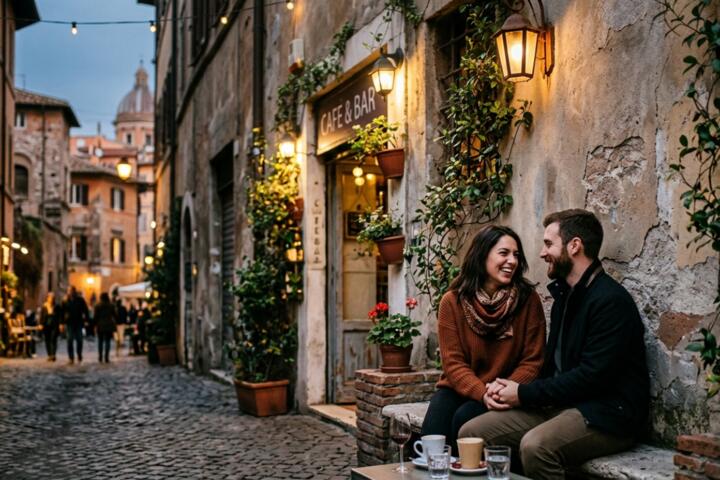
The Evolution of Metropolitan Intimacy
Finding romance in a city isn't about the height of a skyscraper or the price of a rooftop cocktail. It is about "Third Places"—locations that are neither home nor work—where spontaneous human connection thrives. In the 1970s, sociologist Ray Oldenburg identified these spaces as vital for social health; in 2026, they are the secret weapon for modern couples.
Real-world practice shows that romance often blooms in "liminal spaces." This might be a quiet corner of a public library or a botanical garden’s climate-controlled greenhouse during a winter storm. For example, data from social platforms like Bumble suggests that "activity-based" first dates in non-traditional settings have a 15% higher rate of resulting in a second date compared to standard bar meetups.
The numbers back this shift: a recent urban planning study indicated that cities with high "walkability scores" (like Copenhagen or Tokyo) report higher levels of social satisfaction among young adults. When you remove the stress of traffic and the noise of hyper-commercialism, the environment starts working for your relationship, not against it.
The Trap of Conventional Dating Patterns
Many people mistake "expensive" for "romantic," leading to a series of high-pressure, low-reward interactions. The "Dinner-and-a-Movie" trope is a primary pain point because it eliminates eye contact and meaningful dialogue. Relying on "Top 10 Romantic Spots" lists on sites like TripAdvisor often leads to overcrowded venues where intimacy is impossible due to the proximity of other tables.
This lack of originality creates a "transactional" feeling in dating. When you follow a template, the date feels like an interview rather than an adventure. The consequence is burnout; users of apps like Hinge report "dating fatigue" specifically when the environments feel repetitive and sterile.
I’ve observed couples sitting in silence at Michelin-starred restaurants, distracted by their phones or the noise level, while a couple sharing a street taco on a quiet pier is deeply engaged. The environment dictates the energy. If you choose a venue that requires formal performance, you lose the chance for authentic vulnerability.
Strategic Framework for Urban Exploration
Leveraging Architectural "Dead Zones" for Privacy
Seek out "Pocket Parks" or brutalist plazas during off-peak hours. These are often designed by world-class architects but remain empty after office hours. For instance, the Barbican Centre in London offers secluded walkways and a tropical conservatory that feel worlds away from the city's financial heart. Using apps like Google Maps with the "Busy Area" filter can help you identify when these hidden gems are most deserted.
Industrial Heritage as a Backdrop for Adventure
Repurposed industrial sites, such as the High Line in New York or the Landschaftspark in Duisburg, offer a mix of grit and greenery. These spaces stimulate "shared discovery." Walking through a former steel mill turned park creates a sense of exploration that a coffee shop cannot match. This works because it triggers the "misattribution of arousal" effect—the excitement of the environment is subconsciously linked to the person you are with.
Utilizing Transit for Kinetic Romance
Don't view the commute as a chore; view it as a scenic tour. In Lisbon, the 28 Tram offers a cinematic view of the city for the price of a metro ticket. In Chicago, the 'L' train provides a shifting urban canvas. Use the Citymapper app to find routes that offer elevated views or waterfront stretches. Kinetic dates—moving through space together—reduce the pressure of constant eye contact and allow conversation to flow more naturally.
Nighttime Photography and Light Art
Urban environments transform after midnight. Cities with significant light installations, such as those featured during the Fête des Lumières in Lyon, provide a sensory-rich environment for a walk. Using a smartphone with high-end low-light capabilities, like the iPhone 15 Pro or Pixel 8, creates a shared creative task. Taking photos of each other against neon signs or architectural lighting fosters a playful, collaborative atmosphere.
Niche Interest Hubs and Micro-Communities
Instead of a generic bar, find a "listening bar" (inspired by Japanese jazz kissa) where the focus is on high-fidelity audio and quiet appreciation. Places like Spiritland in London or Public Records in Brooklyn prioritize the acoustic experience. This provides a built-in conversation starter—the music—while the low-light, high-comfort design encourages staying for "just one more."
Urban Intervention Case Studies
Case Study 1: The "Transit-Oriented" Connection
Entity: A tech-sector couple in San Francisco.
Problem: Both worked 60-hour weeks and found traditional weekend dates too exhausting to plan.
Action: They started "The Random Stop" challenge using the Transit app. Every Thursday, they would take a random bus line and get off at a stop they had never visited to find the nearest local bakery or park.
Result: This reduced decision fatigue by 80%. Over six months, they discovered 12 "secret" spots, including a hidden redwood grove in the middle of a residential district, significantly increasing their relationship satisfaction scores on a self-reported tracking app.
Case Study 2: The Silent Disco Strategy
Entity: A long-distance couple visiting Berlin.
Problem: Language barriers and "tourist fatigue" made them feel disconnected in a busy foreign city.
Action: They used Airbnb Experiences to find a "Silent Disco Walking Tour." This allowed them to listen to a curated playlist while exploring the city's street art scene at their own pace.
Result: By removing the "noise" of the city and replacing it with a shared soundtrack, they reported feeling a "bubble of intimacy" despite being in a crowded public square.
Comparison of Urban Exploration Methods
| Method | Spontaneity Level | Cost | Best For | Recommended Tool |
|---|---|---|---|---|
| Pocket Park Picnic | High | Low | Quiet Conversation | Google Maps (Satellite View) |
| Rooftop Hopping | Medium | High | Visual Impression | Resy / OpenTable |
| Industrial Heritage | High | Low | Adventurous Exploration | AllTrails (Urban Tags) |
| Specialty Listening Bars | Low | Medium | Deep Focus/Music Lovers | Resident Advisor |
| Nighttime Transit | Medium | Low | Cinematic Movement | Citymapper |
Avoiding Common Urban Dating Pitfalls
A frequent mistake is choosing a location based on "Instagrammability" rather than actual comfort. If a place is "TikTok famous," it will be crowded, loud, and filled with people performing for cameras. This is the antithesis of romance. Always check the "Popular Times" graph on Google; if the peak coincides with your date, pivot to a secondary location nearby.
Another error is failing to account for the "Urban Heat Island" effect. In summer, concrete-heavy areas remain stiflingly hot late into the night. Check Weather.com for localized temperature shifts. A date at a riverside park like Gorky Park in Moscow or Brooklyn Bridge Park will be 3-5 degrees cooler than the city center, making for a much more comfortable experience.
Finally, don't over-plan the logistics. The most romantic moments in a city are often the unplanned ones—stumbling upon a street performer or finding a 24-hour diner. Use technology to find the general "vibe," but leave room for the city to surprise you.
FAQ
How do I find "secret" urban spots without following generic lists?
Use architectural blogs like ArchDaily or Dezeen. Search for "public plazas" or "award-winning landscaping" in your city. These sites highlight beautifully designed spaces that haven't yet been commodified by mainstream travel guides.
What is the best time for a romantic urban walk?
The "Blue Hour"—the period of twilight just after the sun sets but before complete darkness. The city lights begin to twinkle, but there is still enough natural light to see the architectural details. This period usually lasts about 20-30 minutes.
Are public spaces safe for late-night dates?
Safety varies by city. Use apps like Citizen or check local crime heat maps. Stick to well-lit areas with "passive surveillance"—places where there are enough people around (like outdoor cafes) to feel secure, but not so many that it feels crowded.
Can urban romance be affordable?
Absolutely. The "City of Love" is often free. Walking through a historic district, visiting a free art gallery (like the National Gallery in London), or watching the sunset from a public pier costs nothing but provides a high-quality experience.
How do I handle the noise of the city during a date?
Look for "Acoustic Shadows." These are areas behind large buildings or in sunken courtyards where the city's white noise is naturally dampened. Modern urban designs often incorporate these zones to provide respite for residents.
Author’s Insight
In my fifteen years of traveling through over 40 global hubs, I’ve found that the most memorable romantic moments happen when you stop "trying" to be romantic and start being curious. I once spent four hours with a partner just riding the ferry system in Istanbul, drinking tea for 50 cents, and watching the skyline change. We didn't need a reservation or a velvet rope. My advice: look for the "seams" of the city—the places where different neighborhoods or styles meet. That's where the energy is most electric.
Conclusion
Finding romance in the city requires a shift from consumerism to curation. By avoiding the obvious "hotspots" and instead utilizing architectural dead zones, industrial heritage sites, and efficient transit routes, you create a unique narrative for your relationship. Use tools like Citymapper and Resy to handle the logistics, but let the city's natural rhythm dictate the mood. Real intimacy isn't found in a crowded ballroom; it's found on a quiet park bench as the city lights flicker to life around you. Stop looking for the "perfect" place and start looking for the "right" atmosphere.