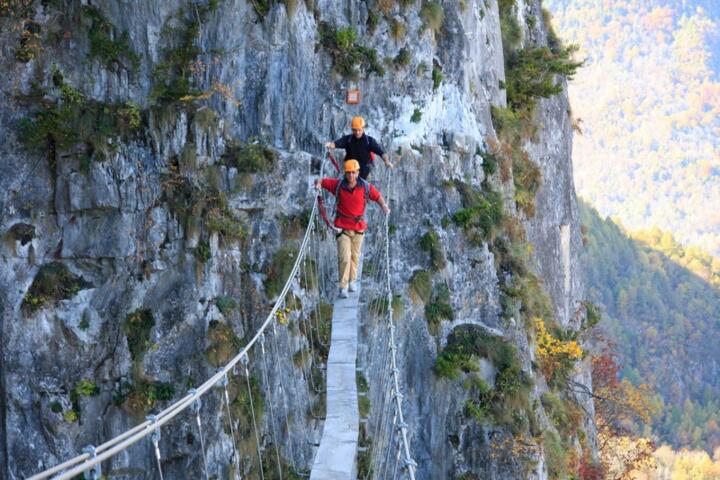
Via Ferrata Explained
Via Ferrata, literally ""iron path"" in Italian, turns steep rock faces into accessible climbing routes secured by steel cables, iron rungs, steps, and suspension bridges. These routes originated in the Dolomites during World War I to move troops through difficult terrain and evolved into a popular climbing adventure for outdoor enthusiasts. A typical Via Ferrata route can range from 200 meters to over 1,000 meters in vertical length, requiring users to clip into cables for safety continuously.
Unlike traditional climbing, Via Ferrata requires less technical skill but demands physical fitness and focus on safety. For instance, the Via Ferrata Ivano Dibona in Italy offers a 500-meter exposed ridge line with secure anchors, attracting thousands annually. Expect walking, scrambling, and climbing, often hundreds of meters above ground, with panoramic views.
The routes vary in difficulty from easy walks using cable handrails to very challenging, almost vertical sections with iron ladders and dangling bridges. They bridge hiking and climbing but are not for casual walkers.
Common Misunderstandings
Many participants underestimate the physical demands of Via Ferrata. Assuming you can just clip in and walk along is a mistake. The constant tension on arms and hands during steel cable progression devours energy fast. Overestimating your condition leads to fatigue, increasing risk.
Lack of proper gear causes problems, too. Using old or incorrect harnesses and lanyard systems can have dangerous consequences. A few hikers showed up on one route in standard hiking boots and cotton gloves — regrettably unprepared for slippery steel rungs and sharp rock edges.
Ignoring weather challenges can also have serious effects. Via Ferrata tracks become death traps when wet or icy since the metal can turn slick, with slips falling hundreds of meters. That’s not panic talk: Fatal accidents still occur yearly because of poor preparation or overconfidence.
Practical Tips and Tools
Choose the Right Gear
Go for a Via Ferrata-specific harness that integrates attachment points for safety lanyards. Stringent manufacturers like Petzl and Black Diamond provide certified gear tested under real loads. The lanyard system typically includes energy absorbers to reduce shock if you slip.
Helmet use isn’t optional on exposed routes due to falling rocks and gear slips. Lightweight climbing helmets, such as the Mammut Skywalker 3 or Black Diamond Half Dome, offer good protection. Gloves are recommended—thin, textured gloves protect hands from cable abrasions and cold.
Learn Proper Clipping Techniques
Correct clipping prevents accidental uncoupling. Always maintain three points of contact with the rock or ladder while clipping the carabiners to the steel cable. Change clips one at a time; never remove both energy-absorbing carabiners simultaneously or your safety line breaks.
Using a via ferrata lanyard with two carabiners creates redundancy. Climbers call this the “always one clipped in” strategy, preventing undue fall risk during transitions—strict and sensible practice.
Prepare Physically
Expect upper body strain, even on moderate routes. Daily exercises, like pull-ups, grip-strength drills, and core stabilization, pay off. Many routes last 3 to 6 hours, alternating easy and difficult parts; endurance matters more than brute strength.
Practice short climbs on indoor climbing walls helps calibrate effort and technique before hitting real rock faces.
Use Route Guides and Maps
Online platforms and guidebooks detail routes’ length, elevation gain, difficulty rating (usually from via ferrata grades F to E), and estimated time. The vertical 2019 edition of ""Via Ferrata: The Complete Guide"" by R. Hagen gives meticulous route info for planning.
Download GPX tracks and route notes on apps like ViewRanger or Outdooractive to prevent wrong turns or early exits, which add risky scrambling sections or long detours.
Check Weather and Timing
Clear dry weather only. Rain, ice, or high winds can turn metal ladders and suspension bridges dangerous. Start early to dodge afternoon thunderstorms. The Dolomites and Alps often see storms mid-afternoon in summer.
Monitoring forecasts on specialized mountain weather apps, like MeteoSwiss or Mountain Weather, narrows down windows where Via Ferrata is safest.
Understand Emergency Procedures
Carrying a small first aid kit and a whistle can save lives. Routes are often remote; response times for rescue teams range from 30 to 90 minutes. Some Via Ferratas in Europe carry numbered markers to speed location reporting.
Having mobile phone signal is unreliable. Consider emergency satellite communicators or location beacons in riskier zones.
Practice Route Etiquette
Slow climbers often cause traffic jams on narrow passages. Communicating clearly with groups and yielding to those descending prevents accidents. Noise echoes deep valleys, so keep yelling to a minimum—no one needs extra stress.
Stick to marked paths and anchors. Removing gear or shortcuts undermines safety for everyone. Leave no trace and pack out all waste.
Hire a Guide When Unsure
Certified guides add safety layers and help with route choices, especially on technically complex Via Ferrata. In regions like northern Italy or Chamonix, Alpine guides know routes by heart and provide equipment rentals too.
Costs vary from 100 to 250 euros per day but reduce second-guessing and safety risks dramatically.
Use Specialized Transport
Many Via Ferrata start or end in remote mountain locations. Shuttle services from nearby towns avoid long, tiring approach hikes before climbing. Some operators offer package tours including gear rental and transit.
The funicular at the Kaisergebirge in Austria cuts a 3-hour approach to 20 minutes—more time to climb.
Real-World Examples
A guide company in the Lake Garda region faced repeat client dropouts due to difficulty underestimations on the Via Ferrata Bochette Alte. They introduced a mandatory pre-check walk of nearby terrain and increased client briefings. Dropout rate fell from 15% to 3% in 2 seasons.
In Chamonix, a small group tackled the Via Ferrata des Evettes, known for its icy early season conditions and exposed ledges. They carried portable traction devices and layered clothing. Despite initial slips, all finished safely within 4 hours without injury, crediting their gear prep and timing.
Checklist for Success
| Step | Action | Tool/Item | Reason |
|---|---|---|---|
| 1 | Check weather forecast | MeteoSwiss app | Avoid wet/dangerous conditions |
| 2 | Wear helmet and gloves | Mammut Skywalker 3, leather gloves | Protect against falls/abrasions |
| 3 | Use via ferrata lanyard | Petzl via ferrata kit | Fall shock absorption |
| 4 | Study route guide | Outdooractive app | Plan difficulty and timing |
| 5 | Practice climbing technique | Local climbing gym | Build endurance and grip |
| 6 | Keep one clip attached | Two carabiner lanyard | Continuous safety loop |
Errors to Avoid
Starting a route without checking current weather leads to slippery metal and severe falls. Climbers sometimes rely on last week’s condition reports, which is reckless. Always check fresh readings.
Skipping branch training for upper body strength causes early exhaustion. Muscle failure halfway on an exposed ladder often triggers panic. Use pull-ups and dead hangs to prepare—don’t just stretch.
Failing to double-check gear before climbing is a silent risk. A stuck or misaligned carabiner, frayed lanyard, or a loose helmet strap puts you in danger without realizing it.
Leaving trash or equipment behind damages both environment and reputation of Via Ferrata users. Observing route etiquette goes beyond niceties; it spares someone else a nasty surprise.
FAQ
How hard is Via Ferrata climbing?
Difficulty varies from easy walking-with-hands to steep climbs involving ladders and small rock faces. Routes are graded A to E, with E being the hardest, requiring good fitness and some climbing experience.
What equipment is absolutely needed?
A certified harness, via ferrata lanyard with energy absorber, helmet, sturdy shoes, and gloves. Renting gear is common where these routes are popular.
Can beginners safely try Via Ferrata?
Beginners can try easy routes with guidance and proper gear. Avoid difficult sections or high-exposure routes without experience or a certified guide.
What risks does one face on Via Ferrata?
Falls, rockfall, fatigue, weather changes, and equipment failure are risks. Constant clipping and safety checks reduce incidents.
How to train for Via Ferrata trips?
Exercise upper body strength, cardiovascular fitness, and practice climbing or scrambling to build endurance and handle exposure confidently.
Author's Insight
I’ve tackled multiple Via Ferrata routes across Europe, including the classic Dolomite traverses. Real learning came from how quickly fatigue sets in—clip management is key. A moment of inattention doubles risk. Equipment choice matters more than I expected. The right gloves saved finger skin many times. Beginners should practice connecting and disconnecting clips in safe settings first. It’s surprisingly technical under pressure.
Summary
Via Ferrata mixes hiking, climbing, and exposure, using fixed steel aids to open mountain routes to non-specialists. Preparation involves choosing proper gear, physical conditioning, studying route details, and respecting safety signals. Avoiding common errors such as poor weather planning or poor gear checks transforms a risky climb into a rewarding memory. Start with easier routes, invest in quality equipment, and consider experienced guides. That way, the iron path leads to confidence and breathtaking views—not accidents.