Urban Glow Dynamics
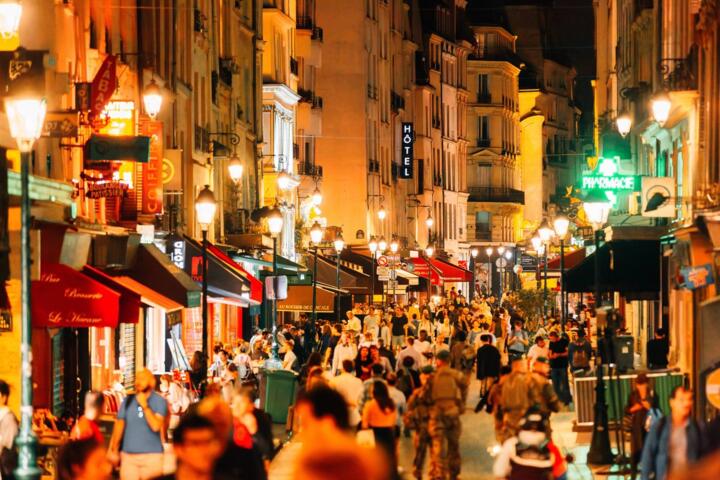
The aesthetic appeal of a city at night is not accidental; it is a product of "Luminous Urbanism." This field combines civil engineering with artistic lighting to highlight historical textures and modern glass facades. When the sun sets, cities like Tokyo or Paris transition into a secondary identity where light defines the boundaries of public space and safety. Unlike daylight, which reveals everything, night-time illumination is selective, creating a curated visual experience that emphasizes landmarks while masking industrial grit.
In practice, cities with high "Light Quality Indexes" use warm-toned LEDs (2700K to 3000K) to preserve the historical ambiance of cobblestone streets while employing high-intensity projections for modern skyscrapers. For instance, the transition of the Burj Khalifa’s facade into a digital canvas requires over 1.2 million LED nodes, turning a structural feat into a visual spectacle. Data from the International Dark-Sky Association shows that cities investing in "smart lighting"—sensors that adjust brightness based on foot traffic—reduce energy consumption by up to 40% while maintaining superior visual appeal.
Nocturnal Travel Pitfalls
Many travelers fail to distinguish between "bright" cities and "beautiful" cities, often ending up in over-illuminated tourist traps that suffer from extreme light pollution. The primary mistake is a lack of technical planning; visitors often arrive at famous viewpoints during "astronomical twilight" when the sky is pitch black, losing the deep blue contrast that makes city lights pop in photography. This results in flat, high-contrast images and a diminished sensory experience.
Furthermore, ignoring the "Last Mile" safety of night-time photography spots can lead to dangerous situations. A beautiful view is often located in isolated park areas or bridges where public transport frequency drops significantly after 10:00 PM. Relying on outdated maps or failing to check local "Night Mayor" initiatives (like those in Amsterdam or New York) means missing out on regulated, safe nocturnal events. The consequence is often a rushed, stressful experience that prioritizes a single Instagram shot over a deep, safe immersion into the city's evening culture.
Strategic Night Planning
Optimizing The Blue Hour
To witness a city at its peak, you must arrive 20 minutes before the end of civil twilight. This is the "Blue Hour," where the ambient light of the sky matches the intensity of the city lights. This creates a balanced exposure that highlights both the architecture and the horizon. Use apps like The Photographer's Ephemeris to track exact timings based on your GPS coordinates.
Leveraging Public Observation
Instead of overcrowded paid platforms, seek out "socially engineered" viewpoints. In Tokyo, the Tokyo Metropolitan Government Building offers free access to its 45th-floor towers, providing a 360-degree view of the Shinjuku skyline. This is more effective than the Skytree for those wanting to see the city's density without the 3,000-yen price tag. Data suggests that mid-level heights (20-40 floors) offer better perspective than extreme heights, as they keep the street-level movement visible.
Utilizing Specialized Services
Professional night-time navigation requires the right tools. Use services like Uber or Grab for door-to-door transit to remote viewpoints, and check the "Safety Score" of neighborhoods via platforms like Numbeo. For photographers, using a tripod is often banned in high-traffic areas; instead, utilize "Lens-Skirt" tools to press your camera against observation deck glass, eliminating reflections from interior lighting.
Monitoring Light Festivals
Plan visits around major lighting events like Vivid Sydney or the Fête des Lumières in Lyon. These festivals transform entire districts into interactive art installations. During Lyon’s four-day event, nearly 3 million visitors witness projections that use 3D mapping technology. Booking accommodation within the "Green Zone" (pedestrian-only areas) during these festivals ensures you are at the heart of the display without transport delays.
Understanding Safety Infrastructure
The most beautiful cities are those that feel safe. Look for cities that have implemented "Blue Light" emergency systems or have high ratings in the EIU Safe Cities Index. Singapore and Hong Kong lead in this regard, where lighting is integrated into the surveillance and safety grid, allowing for 2:00 AM walks through areas like Marina Bay or Victoria Harbour with minimal risk.
Metropolitan Case Studies
Case Study: Hong Kong Transformation
The Tourism Board of Hong Kong faced the challenge of maintaining visitor engagement after shopping malls closed. They implemented "A Symphony of Lights," a synchronized multi-media show involving 40 buildings. By using GPS-synchronized lasers and LED screens, they created a nightly 10-minute event. Result: A 12% increase in evening harbor-side foot traffic and millions of dollars in additional revenue for local cruise operators and waterfront dining.
Case Study: Budapest Heritage Glow
Budapest sought to revitalize its Danube riverfront, a UNESCO World Heritage site. The city invested in floodlighting the Parliament Building and the Chain Bridge using consistent golden-hued lighting. This strategic uniform color palette reduced visual clutter. Result: Budapest moved into the top 5 most photographed European cities at night, with evening river cruises becoming the city’s #1 tourist activity by volume.
Evening Checklist
| Action Item | Purpose | Recommended Tool/Service |
|---|---|---|
| Check Twilight Times | Identify the "Blue Hour" for perfect visuals | PhotoPills or SunCalc |
| Safety Mapping | Avoid high-crime areas after dark | Numbeo Safety Index |
| Transit Verification | Ensure a way back after 11:00 PM | Citymapper or Google Maps (Offline) |
| Equipment Prep | Stabilize shots without bulky tripods | GorillaPod or Platypod |
| Venue Reservation | Secure a window-side seat at rooftop bars | OpenTable or Quandoo |
Common Observation Errors
One frequent mistake is visiting rooftop bars with tinted glass. This significantly alters the color temperature of the city lights and makes photography nearly impossible due to internal glare. Always check if a venue has an outdoor terrace. Another error is relying on the "Night Mode" of smartphones for professional-quality shots. While impressive, these algorithms often over-brighten the scene, losing the "mood" of the night. For true quality, use a manual camera setting with a low ISO (100-400) and a long exposure.
Furthermore, many travelers ignore the weather. A light rain can actually enhance a city's beauty at night by creating reflections on the pavement—a phenomenon known as the "Blade Runner effect." Avoid staying indoors during a drizzle; instead, head to neon-heavy districts like Ginza in Tokyo or Times Square in New York to capture the vibrant, reflected colors on the wet asphalt.
FAQ
Which city has the best free night views?
Tokyo is widely considered the best for free views, specifically from the Tokyo Metropolitan Government Building in Shinjuku. Hong Kong’s Tsim Sha Tsui Promenade also offers an incredible skyline view without an entry fee.
Is it safe to walk in European cities at night?
Generally, yes, but it varies. Cities like Munich, Vienna, and Zurich are exceptionally safe. In larger hubs like Paris or Rome, stay in well-lit tourist corridors and avoid peripheral districts (banlieues) after 10:00 PM.
What is the best time for night photography?
The best time is roughly 15 to 45 minutes after sunset. This is when the sky has a deep blue saturation which contrasts perfectly with the orange and yellow of street lights.
Do city lights stay on all night?
Most major landmarks are dimmed or turned off after midnight to save energy and reduce light pollution. If you want to see the "full glow," plan your activities between 8:00 PM and 11:00 PM.
How do I avoid reflections when shooting through glass?
Turn off your flash, get your lens as close to the glass as possible, and use a dark cloth or specialized "lens hood" to block out the light from the room behind you.
Author’s Insight
In my decade of traveling through over 50 global capitals, I have found that the soul of a city only reveals itself after the commuters go home. I’ve learned that the most "Instagrammed" spots are rarely the most beautiful; the true magic happens in the side-streets of Kyoto or the quiet canals of Venice at 1:00 AM. My best advice is to put the phone down for at least thirty minutes. Allow your eyes to adjust to the low light, and you’ll start to see architectural details—gargoyles, ironwork, and textures—that are completely invisible during the chaotic glare of the day. A city at night isn't just a place; it's a completely different atmosphere that requires a slower pace to appreciate.
Summary
Exploring the world's most beautiful cities at night requires a blend of technical timing, safety awareness, and the right equipment. By targeting the Blue Hour, utilizing smart transit apps, and choosing viewpoints with minimal light interference, you can experience urban environments in their most majestic form. Start by downloading a twilight tracker and booking a central hotel in a city known for its "Luminous Urbanism," such as Budapest or Singapore. The night is half of your travel experience—ensure you treat it with the same planning and respect as your daylight adventures.