Beyond the Binoculars
Wildlife safaris have evolved from passive sightseeing into active participation in the planet’s most delicate ecosystems. At its core, a true safari is about understanding the interconnectedness of species, from the symbiotic relationship between oxpeckers and rhinos to the complex social hierarchies of African elephant herds. It is a lesson in patience, sensory awareness, and ecological literacy.
In practice, this means moving away from the "Big Five" checklist and toward an appreciation of biological nuances. For instance, an expert guide in Botswana’s Okavango Delta won't just point at a leopard; they will interpret the alarm calls of a vervet monkey to predict the predator's path. This level of immersion transforms a simple vacation into a masterclass in natural history.
Data from the World Travel & Tourism Council indicates that wildlife tourism supports over 21 million jobs globally. Furthermore, in regions like the Greater Kruger ecosystem, a single rhino can generate nearly $300,000 in tourism revenue over its lifetime, proving that a living animal is exponentially more valuable than its parts on the black market.
Modern Tourism Pitfalls
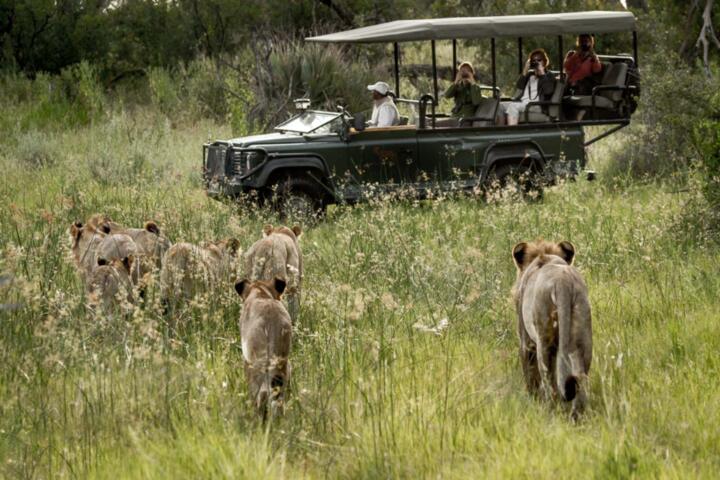
The primary issue in the industry is the "commoditization of sightings." Many operators prioritize quantity over quality, leading to a phenomenon known as "zoo-ification," where twenty vehicles surround a single lion, causing visible distress to the animal and a diluted experience for the guest. This lack of ethical distance not only disrupts hunting and mating patterns but also strips the encounter of its soul.
Poor timing is another significant pain point. Travelers often book based on holiday schedules rather than migratory patterns. Arriving in the Serengeti in mid-April during the "long rains" might result in bogged-down vehicles and hidden wildlife, whereas a February visit to the southern plains would offer the spectacular sight of 500,000 wildebeest calves being born.
Lastly, there is the "leakage" effect. When travelers book through massive international aggregators that do not partner with local communities, up to 80% of the money spent leaves the host country. This disconnect removes the incentive for local populations to protect wildlife, as they see no economic benefit from conservation, often leading to increased human-wildlife conflict.
Strategic Planning
To achieve a life-changing encounter, you must prioritize "private concessions" over public national parks. Private reserves, such as the Sabi Sands in South Africa or the Selinda Reserve in Botswana, limit the number of vehicles at a sighting and allow for off-road driving, which is essential for tracking elusive predators like cheetahs or wild dogs.
Selecting the Right Bio-Region for Your Goals
Every ecosystem offers a different psychological and visual impact. If you seek raw, dramatic predator-prey interaction, the Mara-Serengeti ecosystem during the Great Migration (July–October) is unparalleled. However, if you are looking for rare primates, the Bwindi Impenetrable Forest in Uganda requires a different set of physical preparations and permits. Match your physical fitness and interest—whether it’s birding, photography, or big game—to the specific biome.
Investing in Specialist Guiding and Tracking
The quality of your safari is 90% dependent on your guide. Look for operators who employ Silver or Gold-level guides certified by associations like the Kenya Professional Safari Guides Association (KPSGA). These experts don't just find animals; they explain the "why" behind the behavior. They utilize tools like the CyberTracker app to contribute data to conservation scientists, turning your trip into a citizen-science project.
Leveraging High-End Gear for Low-Light Observation
Modern wildlife encounters are often most intense at dawn or dusk. Equipping yourself with high-end optics is non-negotiable. While a smartphone is fine for a sunset, a pair of Swarovski EL 10x42 binoculars or a camera body like the Sony A1 with a 400mm f/2.8 lens allows you to observe intimate behaviors—like the flickering ear of a caracal—without intruding on their space.
Choosing Conservation-Centric Lodging Models
Support brands that integrate "Impact Statements" into their business models. Companies like Singita or AndBeyond operate on a high-value, low-impact model where a significant portion of the nightly rate goes toward anti-poaching units and community clinics. When you stay at a lodge like Singita Lebombo, you are directly funding the protection of over 33,000 acres of pristine wilderness.
Understanding the Importance of Seasonal Transitions
The "Green Season" (the rainy season) is often overlooked but provides some of the most vibrant photography conditions. While the dry season (June–September) concentrates animals around water holes for easy viewing, the wet season brings migratory birds, lush emerald backdrops, and lower prices. Using services like Expert Africa or Yellow Zebra Safaris can help you navigate these seasonal nuances to find the best value-to-experience ratio.
Real-World Outcomes
A notable example of successful high-impact tourism can be found in the Akagera National Park in Rwanda. In the early 2000s, the park was nearly depleted of wildlife. Through a partnership between the Rwanda Development Board and African Parks, a non-profit conservation organization, lions and rhinos were reintroduced. Tourism revenue from luxury lodges like Magashi Camp has since funded 100% of the park's operational costs, creating a self-sustaining ecosystem that employs hundreds of locals.
In the Pantanal of Brazil, the Onçafari project has revolutionized jaguar conservation. By habituating jaguars to vehicles in a respectful manner, they have created a "jaguar economy." Data shows that cattle ranchers who once shot jaguars to protect livestock now realize that a single habituated jaguar is worth more to the local community in tourism dollars than any cow, leading to a 200% increase in the local predator population over a decade.
Safari Preparation
| Category & Action | Why It Matters | Details |
|---|---|---|
| Logistics: Book Early | Top camps fill 12-18 months ahead. | 12-18mo plan |
| Health: Travel Clinic | Required for borders and safety. | Vax & Meds |
| Ethics: Hands-Off | Avoid facilities with cub petting. | No Petting |
| Packing: Soft Bags | Strict bush plane weight/frame limits. | Max 15kg |
Mistakes to Avoid
One of the most common errors is "park hopping"—trying to see four different reserves in ten days. This results in more time spent in light aircraft or dusty transfer vehicles than actually watching wildlife. To avoid this, spend at least 3–4 nights in a single location. This allows you to learn the individual animals' territories and rhythms.
Another mistake is neglecting the "Small Five." Travelers are often so focused on lions that they ignore the leopard tortoise, antlion, elephant shrew, rhinoceros beetle, and buffalo weaver. Focusing on the micro-ecosystem provides a much more holistic understanding of the environment and keeps the experience engaging during the quieter mid-day hours.
Finally, many travelers fail to manage their expectations regarding "The Kill." Predation is rare to witness. If you spend your whole trip waiting for a hunt, you will miss the beautiful subtleties of social bonding, grooming, and play. Respect the silence of the bush; it is in those quiet moments that the most profound sense of peace is found.
FAQ
What is the best age for children to go on a wildlife safari?
Most luxury lodges have a minimum age of 6 or 12 for safety reasons, especially for walking safaris. For the best experience, wait until children are 8+, as they have the patience for long drives and the ability to remain quiet during sensitive sightings.
How much should I tip my safari guide and tracker?
Standard practice is approximately $20–$30 per guest, per day for the guide, and $15–$20 for the tracker. This is a vital part of their income and rewards high-level expertise and safety management.
Is it safe to go on a walking safari?
Yes, provided it is led by an armed, licensed lead trails guide and a backup guide. Walking safaris focus on tracking and botany rather than confronting large game, offering a unique perspective from the ground.
Can I go on a safari if I have dietary restrictions?
Luxury bush camps are incredibly adept at handling dietary needs (Vegan, Gluten-Free, Halal). Because food is flown in, you must notify the lodge at least 30 days in advance.
What is the "Great Migration" and when should I see it?
It is the circular movement of 1.5 million wildebeest through the Serengeti (Tanzania) and Maasai Mara (Kenya). The famous river crossings usually happen between July and September.
Author's Insight
After spending over a decade tracking elusive species across the Zambezi Valley and the forests of Gabon, I’ve realized that the most "life-changing" moments aren't the ones you capture on a long lens. They are the moments when you turn the engine off and simply listen to the bush breathe. My best advice: put the camera down for at least one hour every drive. Use your own eyes to soak in the scale of the horizon. You will find that the memories etched in your mind are far more vivid than those saved on an SD card.
Summary
A wildlife safari is an investment in your global perspective and the planet’s future. By choosing ethical operators, focusing on slow travel, and prioritizing expert guiding, you move from being a spectator to a guardian of the wild. To make this a reality, start by auditing your potential tour operator's sustainability report and choosing a destination that aligns with your specific biological interests. The wilderness is not just a place to visit; it is a profound reminder of our place in the natural order.